
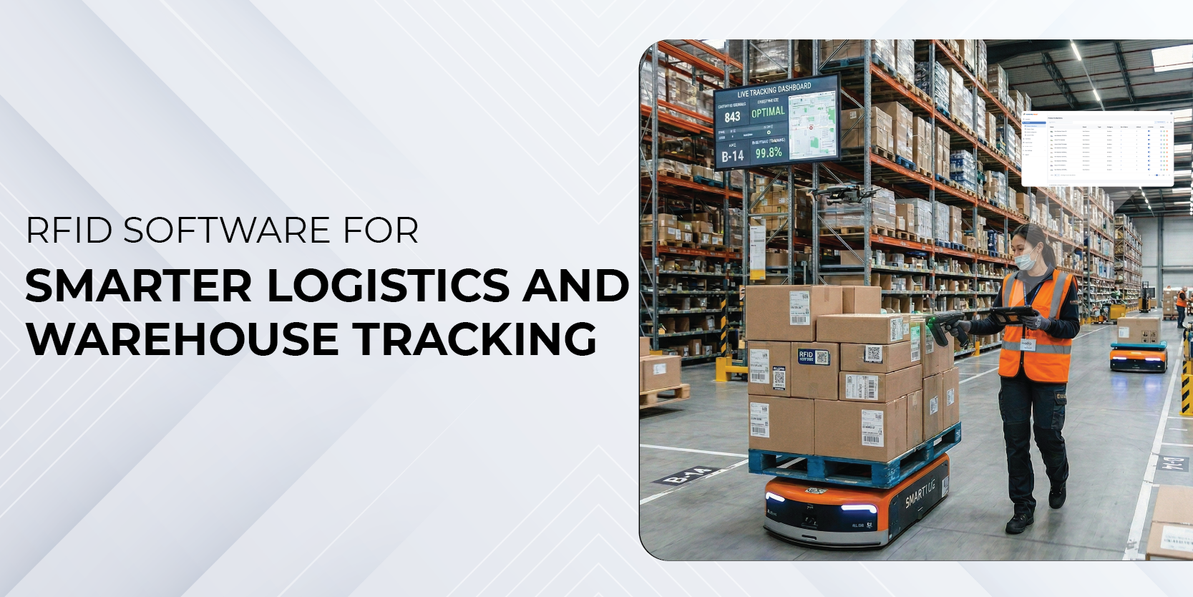
RFID Software for Smarter Logistics and Warehouse Tracking
Introduction
Logistics and warehouse operations face constant challenges: misplaced inventory, slow manual processes, and rising customer expectations for speed and accuracy. Traditional methods often fall short in providing real-time visibility. RFID software offers a smarter solution by automating tracking, reducing errors, and bridging the gap between operational efficiency and transparency.
What is RFID Software?
RFID (Radio Frequency Identification) is a technology that uses tags and readers to identify and track items wirelessly. While the hardware captures signals from tags, RFID software processes this data, integrates it with warehouse or logistics systems, and delivers actionable insights. In simple terms, the hardware gathers information, and the software transforms it into clear intelligence that helps logistics teams improve visibility, streamline operations, and make smarter decisions.
Key Benefits of RFID in Logistics & Warehousing
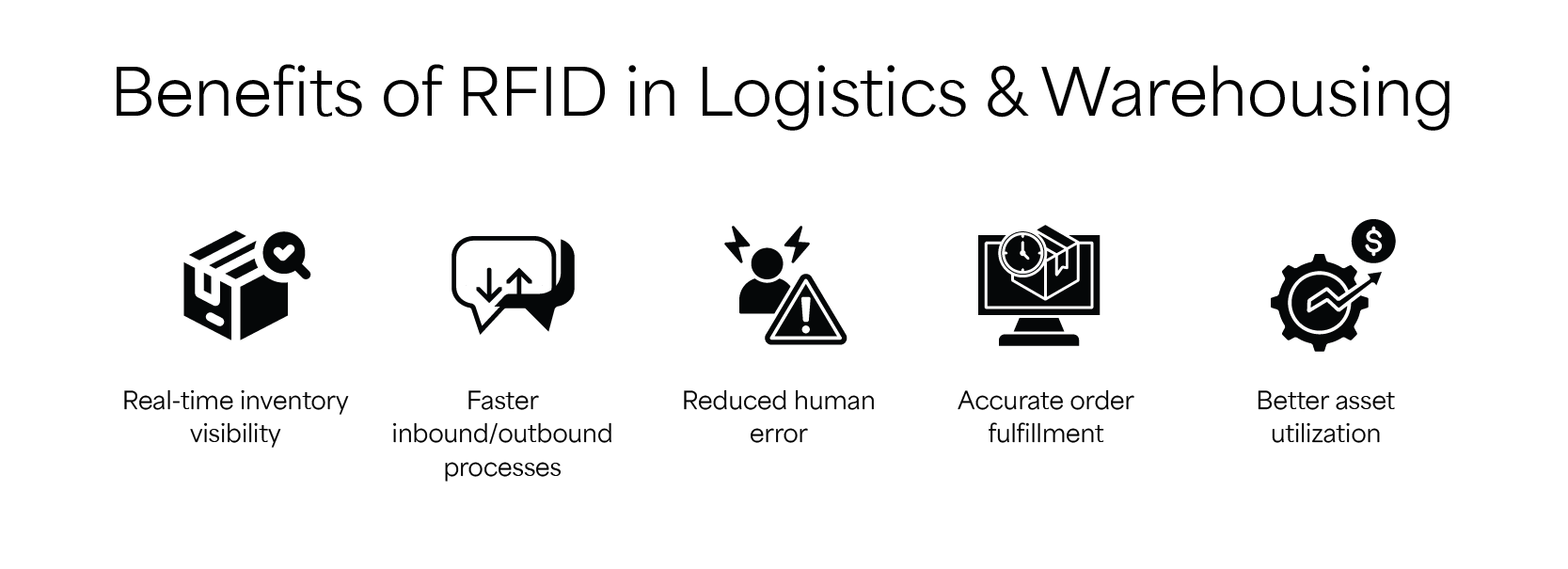
Real-time inventory visibility
RFID software provides instant updates on item locations, helping logistics teams maintain accurate stock levels and reduce delays. This visibility ensures smoother operations and better decision-making across warehouses and supply chains.
Faster inbound/outbound processes
Automated RFID scans speed up receiving and shipping by eliminating manual checks. Multiple items can be scanned simultaneously, reducing bottlenecks at dock doors and ensuring quicker turnaround times for shipments.
Reduced human error
By replacing manual data entry with automated tracking, RFID software minimizes errors such as missed scans and incorrect records. This accuracy improves reliability and reduces costly errors in warehouse operations.
Accurate order fulfillment
RFID ensures the right products are picked, packed, and shipped. This precision enhances customer satisfaction, reduces returns, and strengthens trust in logistics performance.
Better asset utilization
RFID software tracks equipment, tools, and reusable assets in real time. This prevents losses, improves resource allocation, and ensures assets are available when needed, reducing downtime and operational costs.
Core Features of RFID Software
Tag and reader management
RFID software ensures smooth operations by managing tags and readers efficiently. It helps track performance, maintain connectivity, and streamline data flow across warehouse environments.
ERP/WMS integration
Seamless integration with ERP and Warehouse Management Systems allows RFID data to sync with existing workflows. This ensures accurate inventory records and better coordination across logistics operations.
Automated alerts and reporting
The software generates real-time alerts and detailed reports, enabling proactive issue resolution. Managers can quickly identify bottlenecks, track exceptions, and maintain operational efficiency.
Analytics dashboards
RFID software provides dashboards that visualize data trends, helping teams make informed decisions. These insights improve resource allocation, inventory planning, and overall logistics performance.
Scalability
Designed to support multi-site warehouses and global logistics networks, RFID software scales easily as businesses grow. It adapts to larger operations without compromising performance or accuracy.
Use Cases in Logistics & Warehouse Tracking
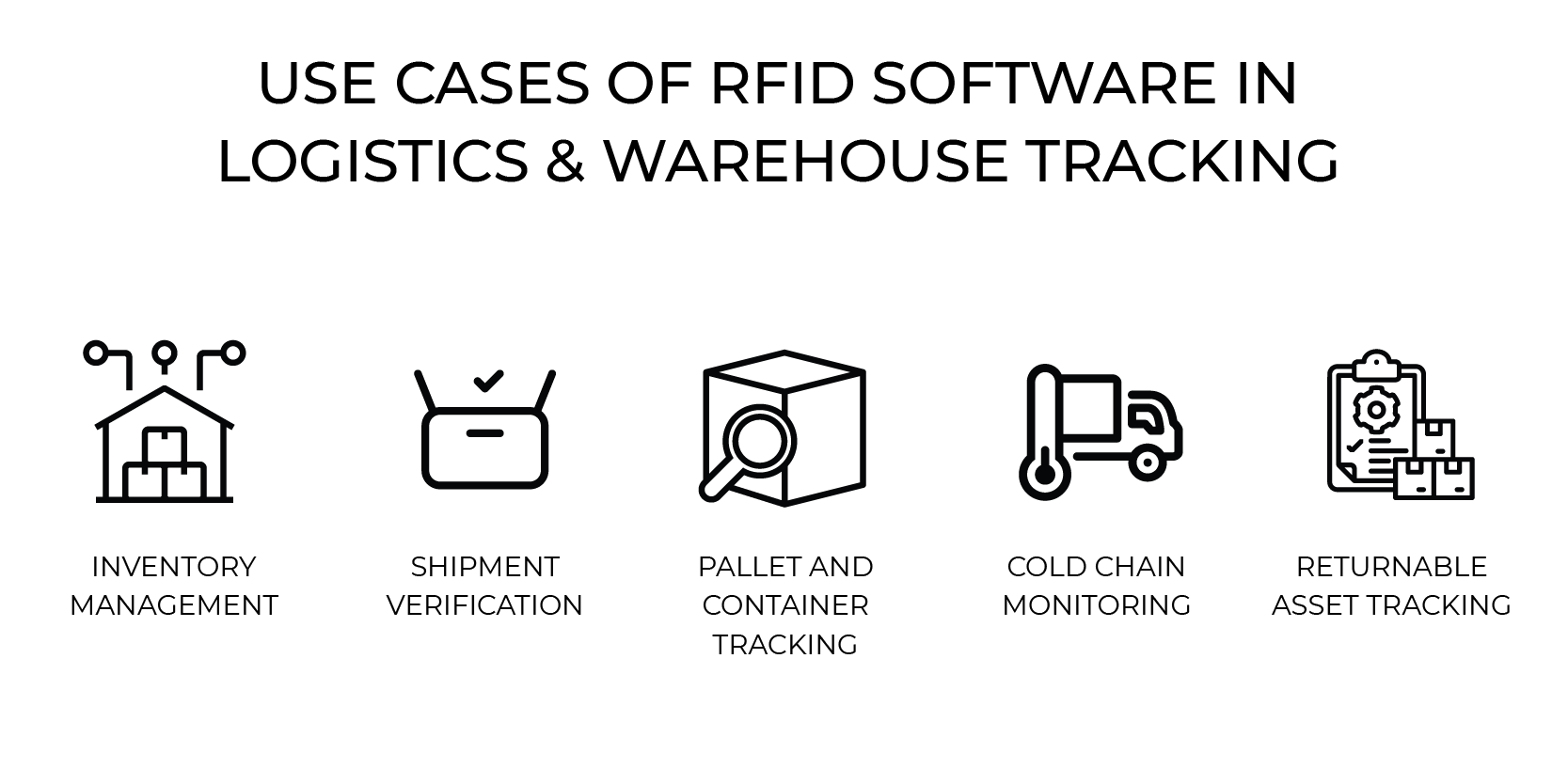
Inventory management
RFID software automates cycle counts and stock checks, reducing manual effort and errors. Real-time visibility ensures accurate inventory levels, helping warehouses maintain efficiency and avoid costly stockouts or overstock situations.
Shipment verification
By verifying items at dock doors, RFID ensures shipments are accurate and complete. This reduces delays, prevents incorrect deliveries, and strengthens customer trust through reliable logistics operations.
Pallet and container tracking
RFID enables seamless monitoring of pallets and containers across facilities. It improves asset utilization, reduces losses, and ensures goods move efficiently through the supply chain with minimal disruption.
Cold chain monitoring
Sensitive goods like pharmaceuticals and food require strict temperature control. RFID software supports cold chain monitoring, ensuring compliance, reducing spoilage, and protecting product quality during storage and transportation.
Returnable asset tracking
Reusable assets such as crates, bins, and tools are easily tracked with RFID. This prevents misplacement, reduces replacement costs, and ensures assets are available when needed for ongoing warehouse operations.
RFID vs Traditional Barcode Systems
|
Aspect |
RFID Software | Traditional Barcode Systems |
|
Speed |
Can scan multiple items simultaneously without line-of-sight, saving time. |
Requires individual scans with line-of-sight, slowing down operations. |
|
Accuracy |
Reduces missed scans and human error through automated tracking. |
More prone to errors due to manual handling and missed barcode reads. |
|
Cost & ROI |
Higher initial investment but delivers long-term savings through efficiency. |
Lower upfront cost but limited ROI due to slower, error-prone processes. |
|
Automation |
Supports real-time data integration and automated workflows. |
Primarily manual, offering less automation and limited system integration. |
TagMatiks Asset Tracking Software
TagMatiks Asset Tracking Software is designed to simplify logistics and warehouse operations by providing real-time visibility into assets. It uses RFID technology to automate tracking, reduce manual errors, and improve efficiency. The software integrates seamlessly with warehouse systems, offering features like reporting, analytics, and scalability for multi-site operations. By enabling smarter asset management, TagMatiks helps businesses streamline workflows, cut costs, and ensure accurate inventory control across complex supply chains.
Future Trends in RFID for Logistics
The future of RFID in logistics is shaped by smarter technologies and sustainability. IoT and AI-driven analytics enable predictive insights and automation, while cloud-based platforms improve scalability and remote access. Integration with robotics enhances automated picking, and sustainability efforts reduce waste, supporting greener warehouse operations.
Conclusion
RFID software transforms logistics and warehouse tracking by delivering real-time visibility, accuracy, and efficiency. Businesses that adopt RFID gain a competitive edge, streamline operations, and meet customer demands more effectively. The future of logistics is smarter, faster, and more sustainable—powered by RFID.
Recent Posts
-
RFID in Linen Tracking
What Is RFID Linen Tracking? RFID linen tracking embeds durable RFID tags into textiles (sheets, to …Jul 12th 2026 -

How to Choose the Right RFID Reader for Shopify Retailers
Understanding RFID in Retail RFID technology (Radio Frequency Identification) allows retailers to tr …Jul 1st 2026 -
Streamlining Appliance Warehousing and Distribution with RFID
Introduction Warehousing appliances are tough because they’re bulky, fragile, and demand often spike …Jun 26th 2026