
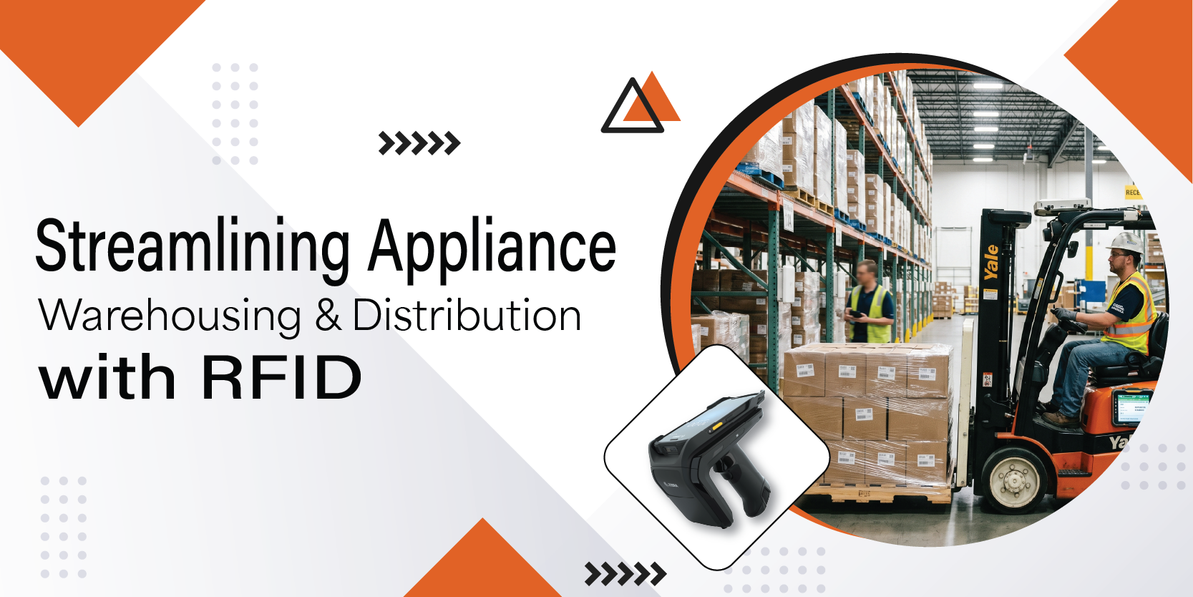
Streamlining Appliance Warehousing and Distribution with RFID
Introduction
Warehousing appliances are tough because they’re bulky, fragile, and demand often spikes seasonally. Managing them efficiently is critical for retailers. RFID technology helps solve these challenges by offering faster tracking, fewer errors, and real-time visibility across the supply chain, making operations smoother and more cost-effective.
Challenges in Appliance Warehousing
- Space management: Large appliances occupy significant warehouse space, requiring smart layout planning to avoid congestion and ensure smooth movement of goods.
- Manual errors: Traditional tracking often leads to mistakes in counts and records, causing confusion and delays in operations.
- Slow distribution: Mis-shipments and delivery delays frustrate customers, reduce trust, and increase overall costs for retailers.
- High costs: Inefficient handling and poor tracking drive up expenses, making warehouse operations less profitable and harder to manage.
Understanding RFID Technology
RFID technology makes appliance warehousing smarter and more efficient. RFID tags store data that scanners read wirelessly, removing the need for line-of-sight like barcodes. This means managers gain real-time visibility into inventory levels and item locations, reducing errors and speeding up operations. By offering automation and accuracy, RFID helps warehouses handle bulky appliances with greater ease and reliability.
Key Applications of RFID in Warehousing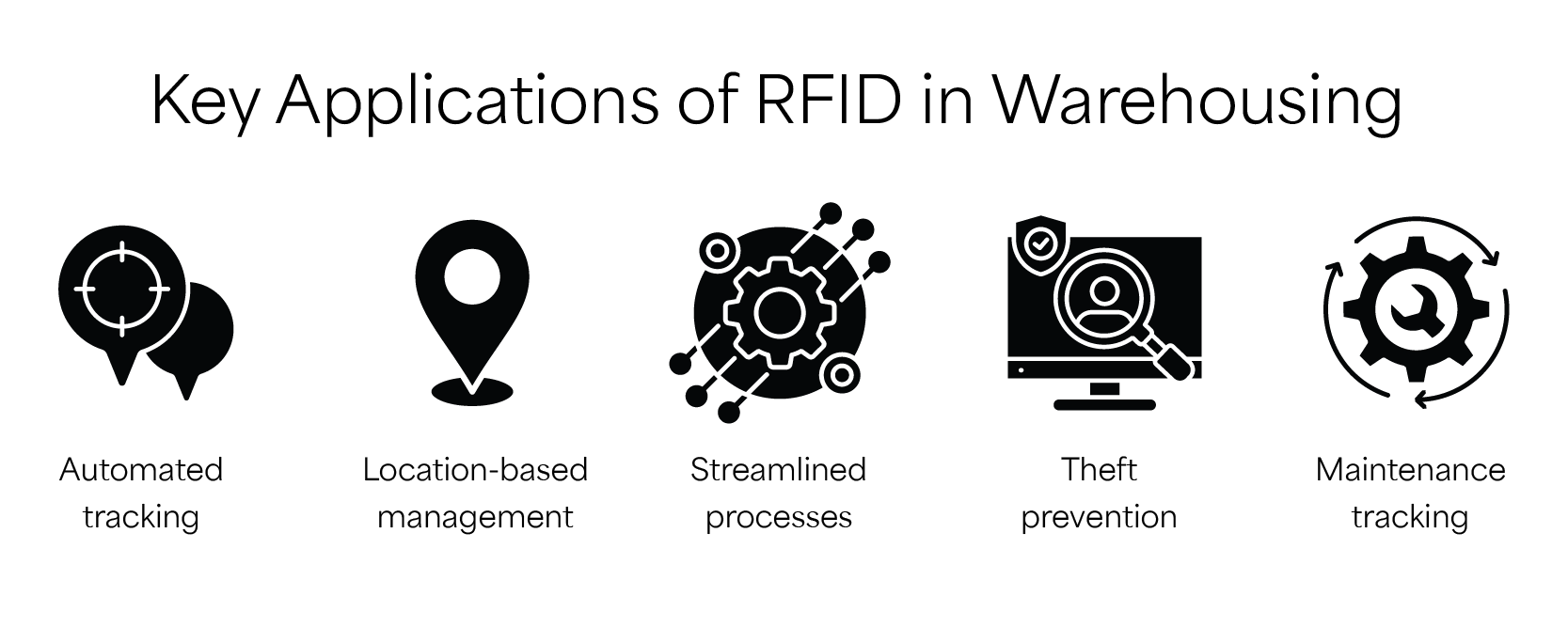
Automated tracking
RFID eliminates manual counts by automatically recording appliance movement. This reduces human error, saves time, and ensures accurate inventory records without constant physical checks.
Location-based management
RFID helps staff quickly locate appliances in large warehouses. Real-time location data improves efficiency, reduces search time, and ensures faster order fulfillment.
Streamlined processes
Receiving and dispatch become faster with RFID. Items are scanned instantly, reducing paperwork and speeding up the flow of goods through the warehouse.
Theft prevention
RFID systems can trigger alerts when appliances move unexpectedly, helping prevent theft and unauthorized removal of valuable items.
Maintenance tracking
RFID can also monitor appliance conditions and maintenance schedules, ensuring products are handled properly and reducing damage during storage or transport.
RFID in Distribution Networks
- Faster fulfillment: Real-time RFID data speeds up order processing by instantly updating inventory and shipment details, helping warehouses fulfill customer orders more quickly and efficiently.
- Improved accuracy: RFID reduces mis-shipments by ensuring the right appliances are picked and dispatched, improving customer satisfaction and lowering costly returns or corrections.
- ERP integration: RFID connects seamlessly with logistics and ERP systems, allowing smooth data flow across operations and better coordination between warehousing and distribution teams.
- Case examples: Many appliance retailers report significant improvements in distribution efficiency after adopting RFID, including faster deliveries, fewer errors, and better overall supply chain performance.
Benefits for Appliance Retailers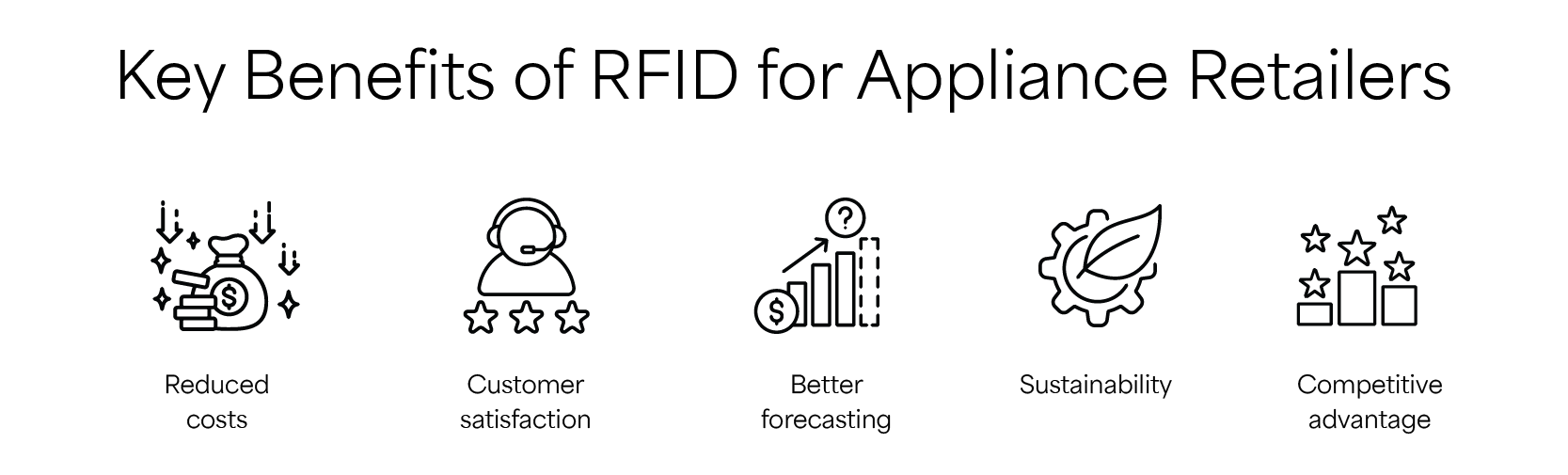
Reduced costs
RFID lowers expenses by cutting down on manual labor and reducing costly errors. Automated tracking ensures smoother operations, helping retailers save money while maintaining accurate inventory records.
Customer satisfaction
Timely and accurate deliveries build customer trust. With RFID, retailers can fulfill orders faster and avoid mis-shipments, leading to happier customers and stronger brand loyalty.
Better forecasting
RFID provides precise, real-time data that supports demand planning. Retailers can predict seasonal spikes more effectively, ensuring they stock the right appliances at the right time.
Sustainability
By reducing waste and optimizing transport routes, RFID helps retailers lower their environmental footprint. Efficient operations mean fewer unnecessary shipments and better use of resources.
Competitive advantage
Retailers adopting RFID gain an edge over competitors by offering faster service, fewer errors, and smarter supply chain management, making them more appealing to customers and partners.
Real-World Examples
In real-world use, RFID has shown impressive results for appliance warehousing and distribution. Some retailers have seen a noticeable drop in mis-shipments, helping them cut costly errors and improve customer trust. Warehouses have reported much faster inventory audits, saving significant time and resources. Distribution centers also experienced quicker deliveries, with fulfillment speed improving considerably. Overall, these examples highlight how RFID adoption can transform operations, making them more efficient, reliable, and customer-focused.
Conclusion
RFID has become a powerful tool in transforming appliance warehousing and distribution. By reducing costs, improving efficiency, and boosting customer satisfaction, it helps retailers stay competitive in a demanding market. Adopting RFID is increasingly seen as a strategic move toward smarter, more sustainable operations. With its ability to streamline processes and provide real-time visibility, RFID technology is expected to play an even bigger role in shaping the future of appliance logistics.
Recent Posts
-
RFID in Linen Tracking
What Is RFID Linen Tracking? RFID linen tracking embeds durable RFID tags into textiles (sheets, to …Jul 12th 2026 -
How to Choose the Right RFID Reader for Shopify Retailers
Understanding RFID in Retail RFID technology (Radio Frequency Identification) allows retailers to tr …Jul 1st 2026 -
Streamlining Appliance Warehousing and Distribution with RFID
Introduction Warehousing appliances are tough because they’re bulky, fragile, and demand often spike …Jun 26th 2026