
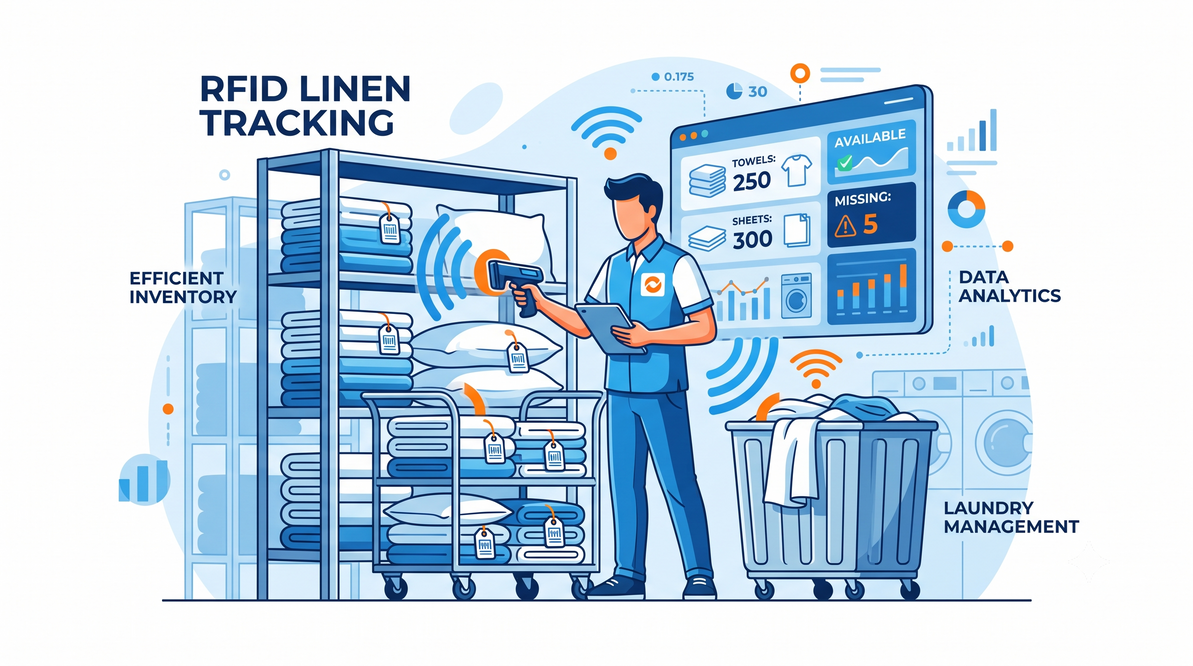
RFID in Linen Tracking
What Is RFID Linen Tracking?
- RFID linen tracking embeds durable RFID tags into textiles (sheets, towels, uniforms, rental clothing, and gowns).
- Each tag carries a unique identifier, read by RFID portals, handheld scanners, or fixed RFID readers.
- Unlike barcodes, RFID enables bulk scanning without line of sight, making it ideal for laundries and hospitals.
Challenges in Linen Management
Traditional linen management faces multiple pain points:
- Loss and theft: Hotels and hospitals often lose thousands of linens annually due to misplacement or theft.
- Manual errors: Hand counting is time‑consuming and prone to mistakes.
- Inventory blind spots: Managers lack visibility into where items are located or how many are in circulation.
- Operational inefficiency: Delays in laundry cycles or shortages impact guest satisfaction and patient care.
- Compliance risks: Healthcare facilities must meet hygiene standards, and poor tracking can lead to regulatory issues.
RFID directly addresses these challenges by automating identification and tracking.
Benefits of RFID in Linen Management
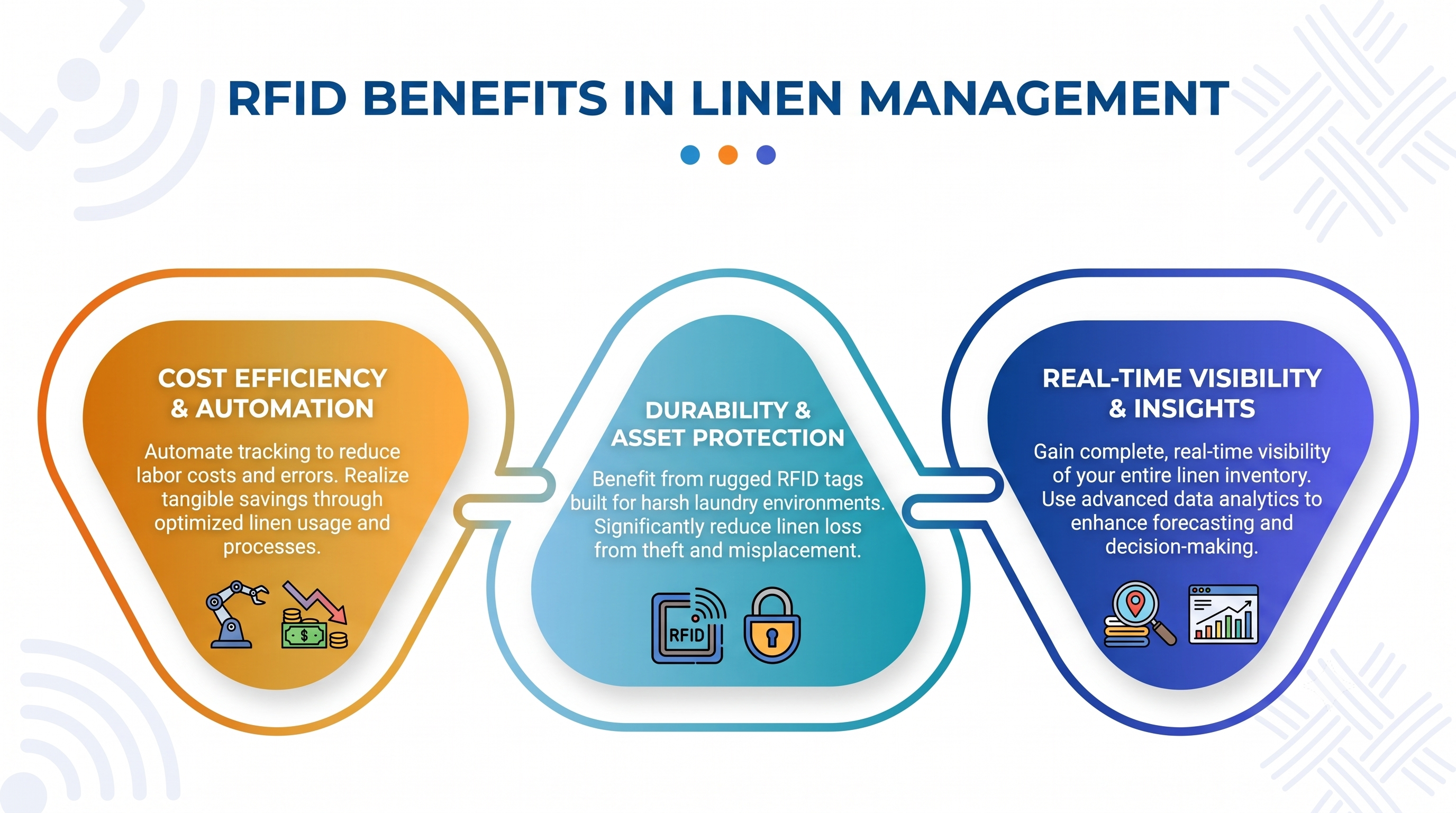
- Automation: Bulk scanning eliminates the need to count laundry items manually.
- Durability: Laundry-grade tags survive hundreds of wash cycles.
- Visibility: Real-time tracking across collection, washing, and redistribution.
- Loss Prevention: Detects shrinkage and theft.
- Cost Savings: Reduces replacement purchases and labor costs.
- Data Analytics: Provides lifecycle insights, usage frequency, and replacement forecasting.
How RFID Linen Systems Work
RFID tags for linens are typically UHF (Ultra High Frequency) passive tags designed to withstand washing, drying, and ironing.
- RFID Tag: Encapsulated in pre-print tags, heat‑resistant material, sewn or embedded into the fabric.
- Communication: Tags transmit a unique ID when energized by an RFID reader’s radio waves.
- RFID Readers and RFID Antennas: Installed fixed readers at laundry entrances, exits, or storage areas to capture movement. If we have to take quick, mobile inventory, we have to use an RFID handheld reader.
- Software integration: Data flows into an RFID linen tracking system (Tagmatiks AT RFID Software), updating inventory counts.
This seamless process ensures every item is accounted for without manual intervention.
Industrial Applications of Linen Tracking with RFID
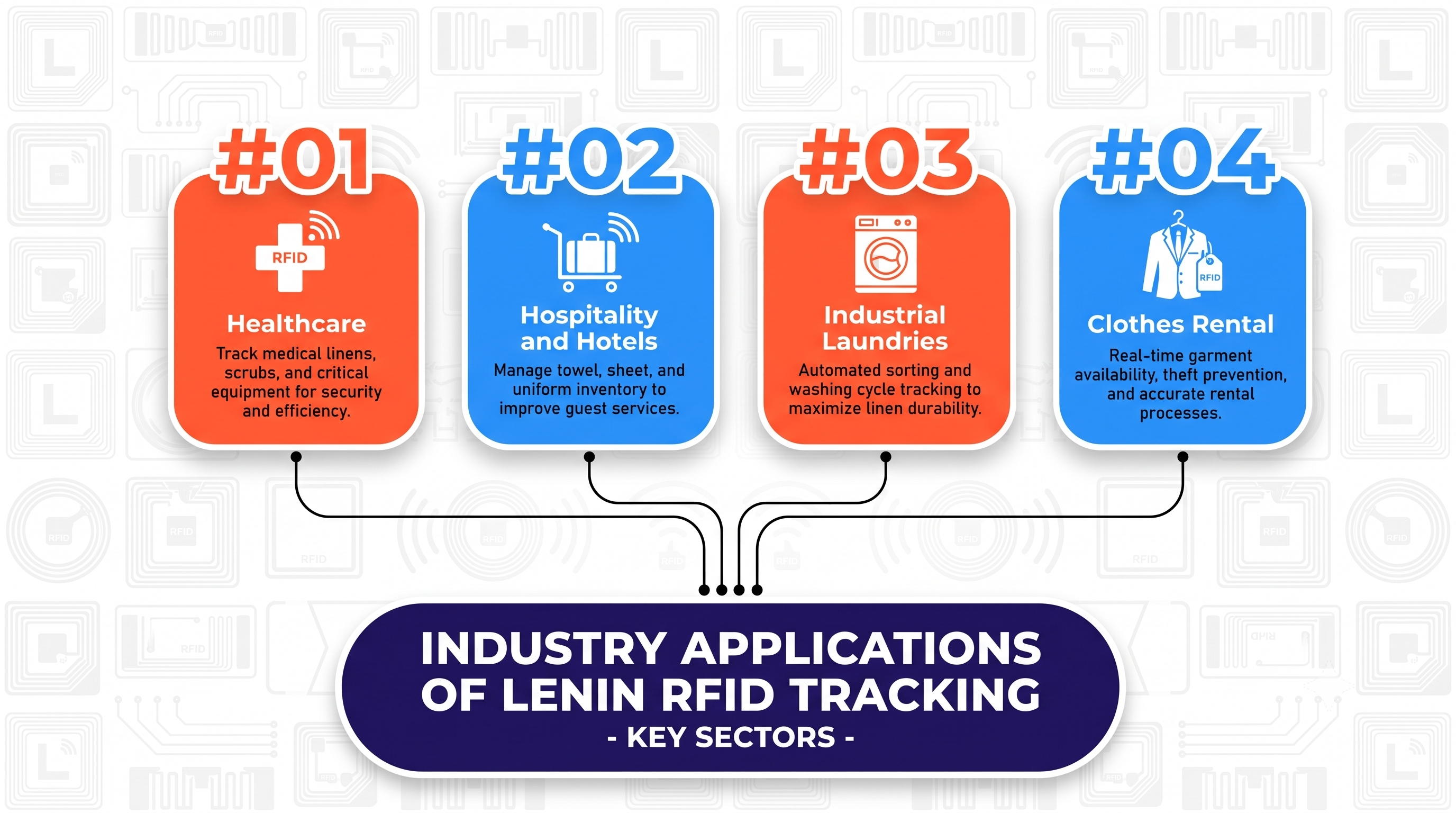
- Healthcare: Tracks gowns, scrubs, and bed linens for hygiene compliance.
- Hospitality: Hotels monitor towels, sheets, and uniforms to prevent losses.
- Industrial laundries: Uniform services manage large-scale textile flows with automated sorting.
- Rental Clothes: Rental clothing and commercial laundry industries track garments and linens. By embedding specialized, washable tags into items, businesses can automate inventory, reduce loss, and maintain strict hygiene control across hotels, hospitals, and uniform rental services.
RFID Tags for Linen Tracking
Different tag types are used depending on textile type, durability needs, and laundry process, like sewn into the seam or label, RFID heat seal tag, etc.
RFID Readers for Linen Tracking
RFID readers capture tag data at different points in the laundry workflow:
- Overhead readers: Used at sorting conveyors or folding stations to identify items individually.
- Handheld readers: Portable devices for spot checks, audits, and verifying deliveries at customer sites.
- RFID Fixed Reader: UHF fixed readers paired with external antennas to monitor linens across laundry rooms, distribution chutes, or loading bays.
- RFID Portal: Positioned at dispatch docks or storage rooms to track linen movement in/out.
Software Solutions for RFID Linen Tracking
The leading RFID linen tracking software solution is the TagMatiks AT RFID platform—each offering cloud-based dashboards, automated workflows, and ERP integration to streamline laundry operations, reduce losses, and improve service quality.
Role of TagMatiks RFID AT Software
TagMatiks AT isn’t just about asset tracking in industries like healthcare or oil & gas—it also works seamlessly for RFID linen tracking, which is a huge advantage for sectors like hospitality, hospitals, and laundries where managing linens is critical.
Here’s how it fits perfectly into linen management:
- RFID tagging options: Linens can be tagged with durable RFID labels (Tags, heat-sealed, or pre-printed laundry tags) so each item is uniquely identifiable.
- Audits & cycle counts: Staff can quickly scan entire batches of linens using handheld RFID readers, making inventory checks faster and more accurate than manual counting.
- Optimized workflows: Automate check-in/check-out processes when linens move between laundry, storage, and usage areas. This reduces losses and ensures accountability.
- Flexible setup: Whether it’s a hospital needing on-premise control or a hotel chain using cloud-based access, TagMatiks AT adapts to the environment.
- Reports & analytics: Generate insights on linen usage, loss rates, and replacement cycles, helping organizations cut costs and improve efficiency.
- Asset management: Track the lifecycle of each linen item — from purchase to wash cycles to eventual retirement — ensuring better quality control and compliance.
This makes TagMatiks AT a leading solution for RFID linen tracking, as it reduces shrinkage, improves operational efficiency, and provides real-time visibility into linen assets.
Comparison: RFID vs Barcode in Linen Tracking
| Feature | RFID | Barcode |
|---|---|---|
| Durability | Survives 200–500+ wash cycles | Fades/peels after a few washes |
| Scanning | Bulk, non-line-of-sight | One-by-one, line-of-sight |
| Speed | 200+ items in <5 seconds | 35–50 minutes manually |
| Data | Lifecycle, usage, location | Limited to ID only |
| Cost Efficiency | Higher upfront, long-term savings | Lower upfront, higher replacement costs |
RFID has a clear advantage over barcode.
Conclusion
RFID linen tracking, powered by TagMatiks AT, transforms textile management into a data-driven, automated system. Hospitals, hotels, and laundries gain real-time visibility, lifecycle tracking, and cost savings, making RFID the industry standard for textile management.
Recent Posts
-
Comprehensive Comparison of RFID Metal Mount Tags
RFID Metal Mount Tags are engineered to function reliably on metallic surfaces, where standard RFID …Sep 14th 2026 -
RFID Read Range Dropping? 5 Factors & Settings to Fix It
Introduction RFID technology is the backbone of modern retail and business operations. From tracking …Sep 7th 2026 -
Comprehensive Guide to Troubleshooting RFID Handheld Readers
RFID handheld readers are critical tools for inventory management, asset tracking, and logistics. Wh …Aug 19th 2026