
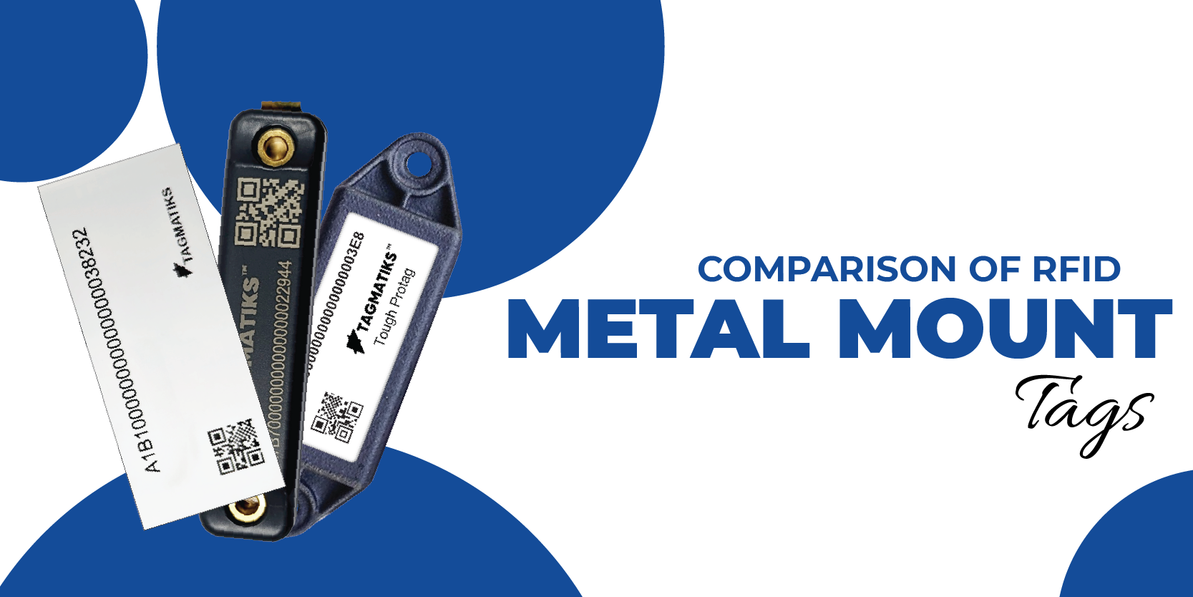
Comprehensive Comparison of RFID Metal Mount Tags
RFID Metal Mount Tags are engineered to function reliably on metallic surfaces, where standard RFID tags often fail due to signal reflection and interference. These specialized tags use isolation layers, tuned antennas, and durable housings to ensure consistent performance. Below is a detailed comparison of TagMatiks pre-printed/pre-encoded on-metal labels, Gorilla Series Tags.
Detailed Comparison of RFID Tags
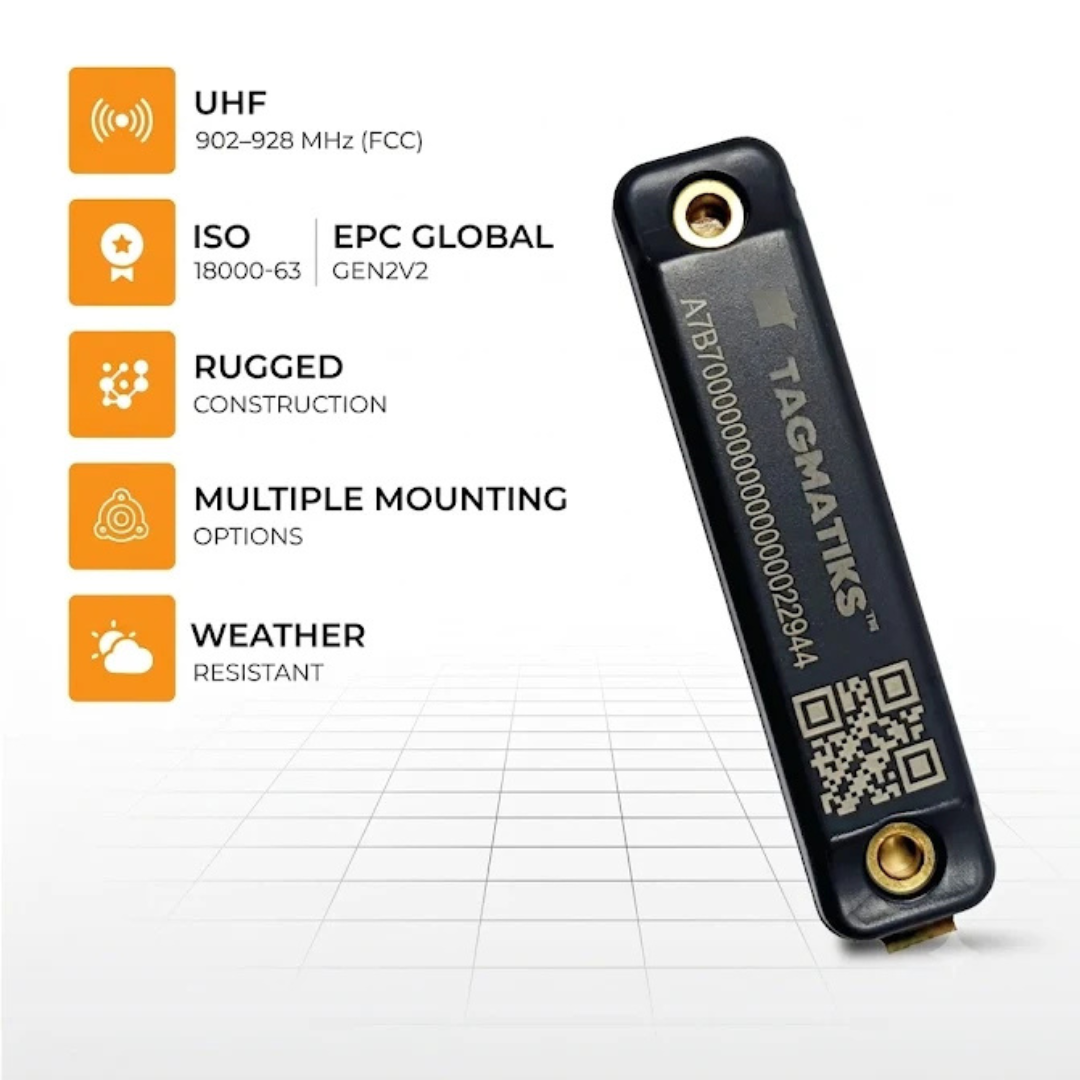
1. TagMatiks Pre-printed/Pre-encoded On-Metal Labels
- Advantages:
- Thin, adhesive-backed, easy to apply.
- Pre-printed and pre-encoded for immediate deployment.
- Ideal for IT assets, office equipment, and retail inventory.
- Limitations:
- Lower durability in harsh outdoor environments.
- Shorter read ranges compared to hard tags.
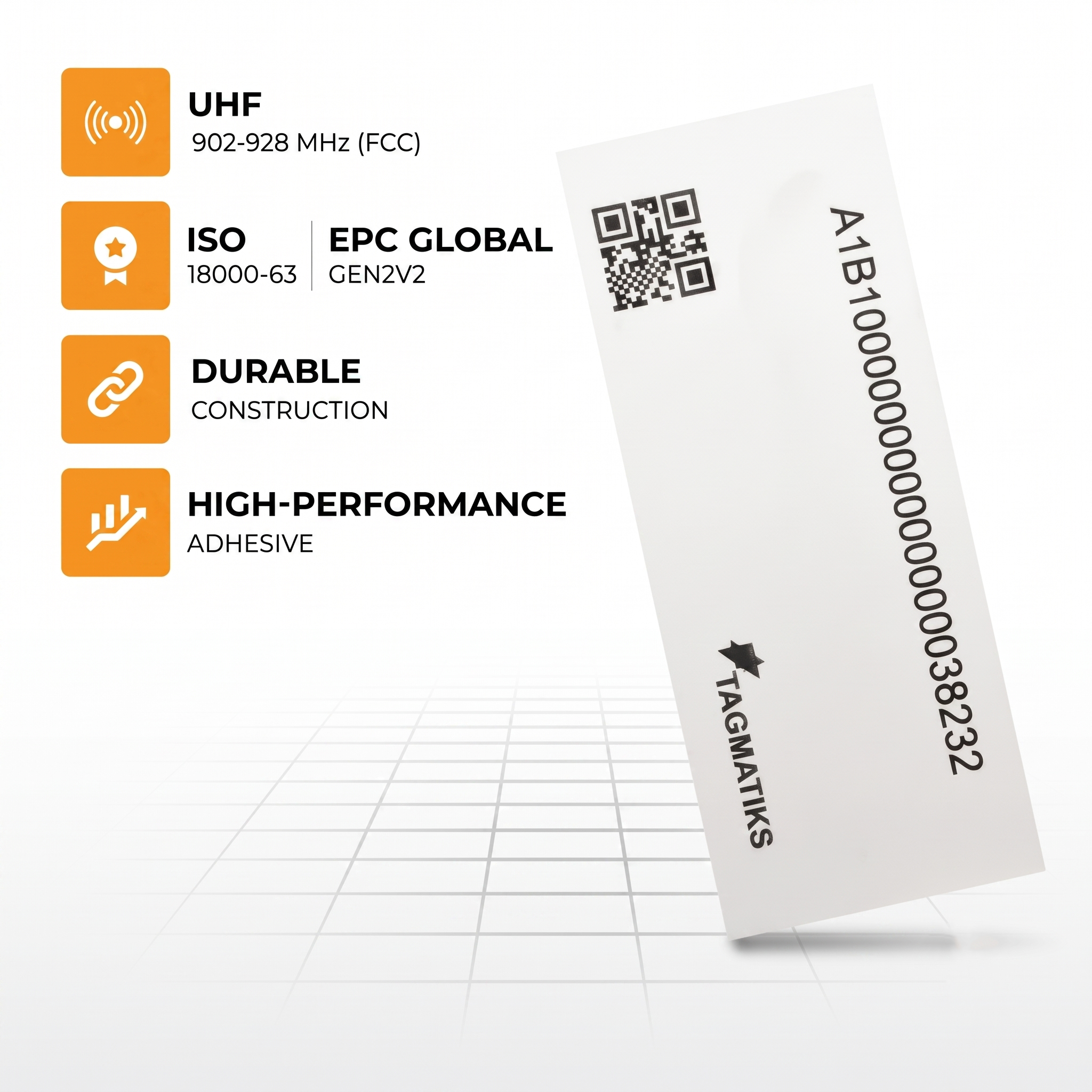
3. TagMatiks Gorilla Series (Mini, Long, Square)
- Advantages:
- Rugged ABS housing for industrial use.
- Gorilla Mini: compact for tools and IT assets.
- Gorilla Long: extended read range for racks and containers.
- Gorilla Square: balanced size for warehouse logistics.
- Limitations:
- Larger footprint compared to adhesive labels.
- Higher cost per tag.
Comparison Table:
|
Tag Type |
Dimensions |
Material/Structure |
Best Use Cases |
Strengths |
Limitations |
|
TagMatiks On-Metal Label 60x6x0.9mm |
60 × 6 × 0.9 mm |
Thin adhesive label |
IT assets, tools |
Slim profile, easy to apply, cost-effective |
Shorter read range |
|
TagMatiks On-Metal Label 45x8x1.5mm |
45 × 8 × 1.5 mm |
Adhesive label |
Retail, office equipment |
Compact, versatile, pre-encoded |
Moderate durability |
|
TagMatiks On-Metal Label 45x18mm |
45 × 18 mm |
Adhesive label |
Asset tracking, shelving |
A larger antenna, better read range |
Slightly bulkier |
|
Small form factor |
Rugged ABS housing |
Tools, IT assets |
Compact, durable, impact-resistant |
Shorter read range |
|
|
Elongated |
ABS housing |
Industrial racks, containers |
Long read range, rugged |
Larger footprint |
|
|
Square |
ABS housing |
Warehouse, logistics |
Balanced size, durability |
Less flexible for curved surfaces |
Key Considerations When Choosing RFID Tags
- Surface Compatibility
- Standard RFID tags fail on metallic surfaces due to signal reflection.
- On-metal tags use isolation layers or tuned antennas to perform reliably.
- Always match the tag type to the surface (metal, plastic, wood, or concrete).
- Tag Size & Form Factor
- Small adhesive labels are ideal for compact IT assets.
- Larger tags provide extended read ranges for industrial racks.
- Consider available space on the asset and whether the tag needs to be discreet or visible.
- Read Range Requirements
- Short-range (1–2 m) → adhesive labels for IT equipment.
- Medium-range (3–5 m) → Gorilla Mini or Square tags for warehouse assets.
- Long-range (6–10 m) → Gorilla Long Hard Tags for outdoor logistics.
- Durability & Environment
- Indoor controlled environments → adhesive labels are sufficient.
- Outdoor harsh environments → rugged ABS or PPS housing tags.
- Application Method
- Adhesive-backed Tags → quick, low-cost deployment.
- Screw/bolt mount hard tags → secure, tamper-resistant installation.
- Data Encoding & Printing
- Pre-printed/pre-encoded labels (TagMatiks) save time in deployment.
- Custom encoding allows integration with ERP/WMS systems.
- Consider if human-readable printing (barcode/serial number) is required.
- Cost vs Value
- Adhesive labels → lowest cost, best for high-volume IT assets.
- Rugged Gorilla Hard Tags → higher cost, but long lifespan.
- Performance Needs:
- Long read range → Gorilla Long RFID Hard Tag.
- Compact size → Gorilla Mini or 45x8mm On-Metal Label.
Conclusion
- For IT and office assets: TagMatiks On-Metal tags (compact, cost-effective).
- For industrial logistics: Gorilla Long Hard Tags (durable, long read range).
The right choice depends on balancing the environment, durability, read range, and cost.
Recent Posts
-

Comprehensive Comparison of RFID Metal Mount Tags
RFID Metal Mount Tags are engineered to function reliably on metallic surfaces, where standard RFID …Sep 14th 2026 -

RFID Read Range Dropping? 5 Factors & Settings to Fix It
Introduction RFID technology is the backbone of modern retail and business operations. From tracking …Sep 7th 2026 -
Comprehensive Guide to Troubleshooting RFID Handheld Readers
RFID handheld readers are critical tools for inventory management, asset tracking, and logistics. Wh …Aug 19th 2026