
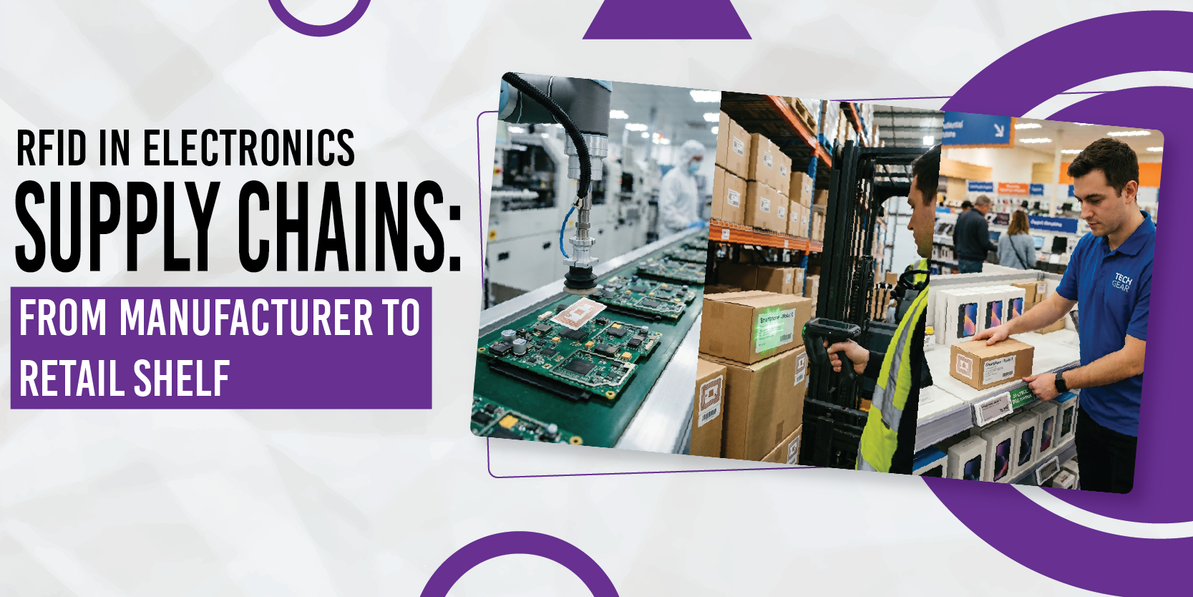
RFID in Electronics Supply Chains: From Manufacturer to Retail Shelf
Introduction
Radio Frequency Identification, or RFID, is a technology that uses radio waves to identify and track tags attached to objects. Unlike barcodes, RFID doesn’t require line-of-sight scanning, making it faster and more efficient. In the electronics industry, supply chains are complex: multiple vendors, global shipping routes, and high-value products like smartphones, laptops, and semiconductors. Managing this flow requires precision.
Think about it: How does your laptop or TV travel thousands of miles, through multiple points in a supply chain, and still arrive on time and intact? The answer often lies in RFID.
RFID at the Manufacturing Stage
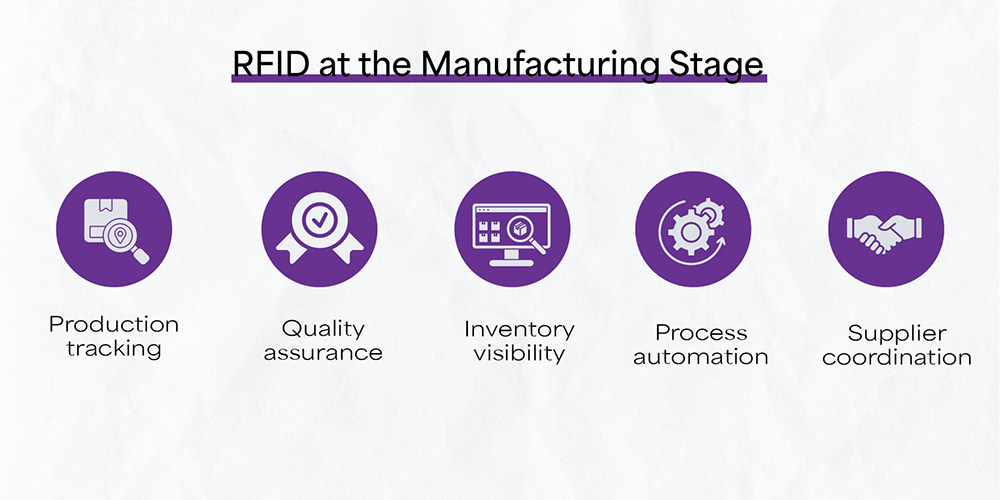
- Production tracking: RFID tags embedded in components allow manufacturers to trace each part from production, ensuring accuracy and accountability throughout the assembly process.
- Quality assurance: RFID helps identify defective parts early, reducing costly recalls and ensuring only high-quality components move forward in the supply chain.
- Inventory visibility: Real-time RFID updates give factories precise stock levels, preventing shortages, avoiding overproduction, and supporting efficient resource planning.
- Process automation: Automated RFID scanning reduces manual checks, speeds up workflows, and improves overall production efficiency.
- Supplier coordination: RFID data shared with suppliers enhances collaboration, ensuring timely delivery of raw materials and components.
RFID in Logistics and Transit
- Shipment monitoring: RFID-enabled pallets and containers provide real-time tracking, helping logistics teams monitor product movement across borders and ensure timely deliveries.
- Security benefits: RFID helps authenticate electronics and track their location, reducing risks of theft and counterfeiting during transit.
- Efficiency gains: Automated RFID data sharing speeds customs clearance, reduces paperwork delays, and improves overall shipping efficiency.
- Condition monitoring: RFID sensors can track temperature or handling conditions, ensuring sensitive electronics remain safe during transport.
RFID at Distribution Centers
Automated sorting
RFID readers quickly identify items, streamlining sorting and routing. This automation reduces manual effort, speeds up warehouse operations, and ensures products are directed to the correct destinations without delays.
Error reduction
Automated RFID systems minimize human mistakes in handling shipments. By reducing misplacements and incorrect labeling, distribution centers achieve higher accuracy, improving reliability and customer satisfaction.
Data integration
RFID data connects seamlessly with ERP systems, giving managers a unified view of operations. This integration supports better decision-making, efficient resource allocation, and improved supply chain coordination.
RFID on the Retail Shelf
Smart shelves
Shelves equipped with RFID readers automatically update stock levels. Staff receive alerts when items run low, ensuring timely restocking and preventing lost sales opportunities.
Customer experience
RFID enables faster checkout, sometimes even cashier-less shopping. This convenience reduces waiting times, enhances customer satisfaction, and creates a modern retail experience.
Loss prevention
RFID systems detect unauthorized removal of products, reducing shrinkage. Retailers benefit from improved security, protecting valuable electronics and minimizing financial losses.
Benefits Across the Supply Chain
Transparency
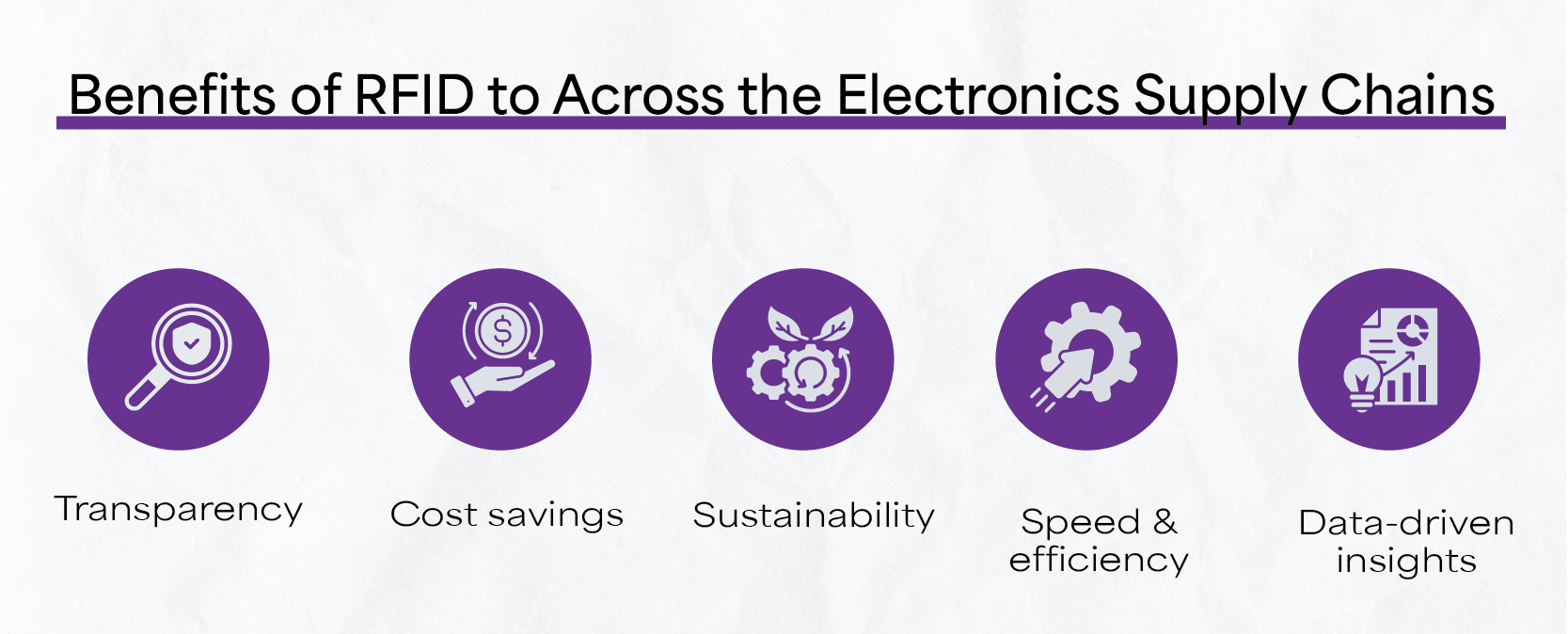
RFID provides end-to-end visibility, allowing manufacturers, distributors, and retailers to track products in real time. This transparency ensures accountability at every stage, reducing disputes and improving trust among supply chain partners.
Cost savings
By reducing shrinkage, minimizing human errors, and improving inventory accuracy, RFID helps companies cut operational costs. Better forecasting and efficient stock management also prevent overproduction and excess storage expenses.
Sustainability
Optimized logistics powered by RFID reduce unnecessary shipments and waste. Accurate tracking lowers carbon emissions by streamlining transportation routes, while better inventory control prevents disposal of unsold or expired electronics.
Speed and efficiency
RFID accelerates processes like customs clearance, warehouse sorting, and retail checkout. Faster operations mean reduced delays, improved customer satisfaction, and smoother movement of goods across global supply chains.
Data-driven insights
RFID generates valuable data that can be analyzed for trends, demand forecasting, and performance optimization. These insights empower businesses to make smarter decisions, adapt quickly to market changes, and enhance competitiveness.
Challenges and Considerations
Implementing RFID in electronics supply chains requires significant upfront investment in tags, readers, and integration systems. Companies must carefully balance these costs against long-term benefits. Another challenge is ensuring compatibility with existing technologies, as integration hurdles can slow adoption and demand additional training or infrastructure upgrades.
Future of RFID in Electronics
The future of RFID looks promising as it merges with IoT, sensors, and AI to enable predictive analytics and smarter supply chains. Blockchain integration adds secure, tamper-proof records, while retail innovation brings cashier-less stores and personalized shopping experiences, reshaping how electronics are tracked, sold, and managed globally.
Conclusion
From manufacturer to retail shelf, RFID is reshaping electronics supply chains into smarter, faster, and more reliable systems. It delivers transparency, reduces costs, and enhances customer experiences. By improving efficiency and security, RFID ensures products move seamlessly across borders, warehouses, and retail shelves, setting the stage for future innovations.
Recent Posts
-
Comprehensive Comparison of RFID Metal Mount Tags
RFID Metal Mount Tags are engineered to function reliably on metallic surfaces, where standard RFID …Sep 14th 2026 -
RFID Read Range Dropping? 5 Factors & Settings to Fix It
Introduction RFID technology is the backbone of modern retail and business operations. From tracking …Sep 7th 2026 -
Comprehensive Guide to Troubleshooting RFID Handheld Readers
RFID handheld readers are critical tools for inventory management, asset tracking, and logistics. Wh …Aug 19th 2026