
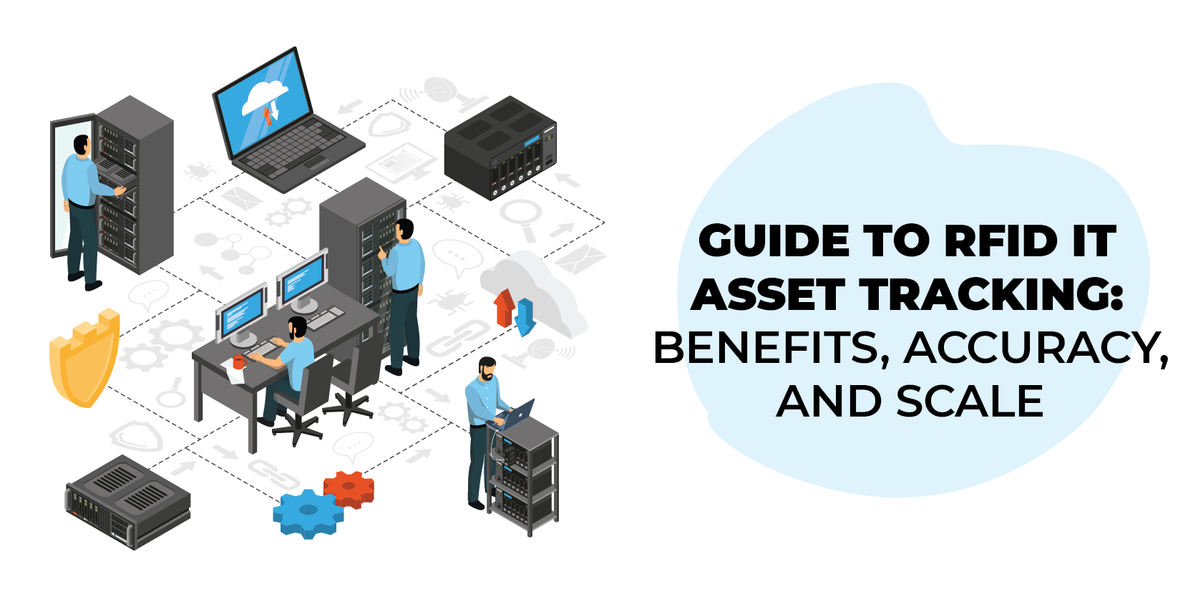
Complete Guide to RFID IT Asset Tracking: Benefits, Accuracy, and Scale
Introduction
Managing IT assets has always been a challenge for organizations. From laptops and servers to networking equipment, keeping track of these resources is critical for efficiency, compliance, and security. Radio frequency identification has emerged as a powerful solution to streamline IT asset management.
Why IT Asset Tracking Matters
IT assets represent significant investments. Losing track of them leads to wasted resources, compliance risks, and potential data breaches. Effective tracking ensures accountability, reduces costs, and supports business continuity.
The Rise of RFID Technology
RFID technology has evolved from retail and logistics into IT asset management. Its ability to provide real-time visibility and automate tracking processes makes it a game-changer for modern organizations.
Understanding RFID Technology
RFID Basics Explained
RFID uses electromagnetic fields to automatically identify and track tags attached to objects. Unlike manual tracking, RFID enables fast, contactless identification.
How RFID Differs from Barcodes and QR Codes
Barcodes and QR codes require line-of-sight scanning. RFID, on the other hand, can read multiple tags simultaneously without direct visibility, making it far more efficient.
Key Components of an RFID Asset Tracking System
Tags: Attached to Assets for Identification
RFID tags are the foundation of asset tracking. For IT environments, on-metal tags are critical because many assets (servers, laptops, racks) have metallic surfaces that interfere with standard RFID signals.
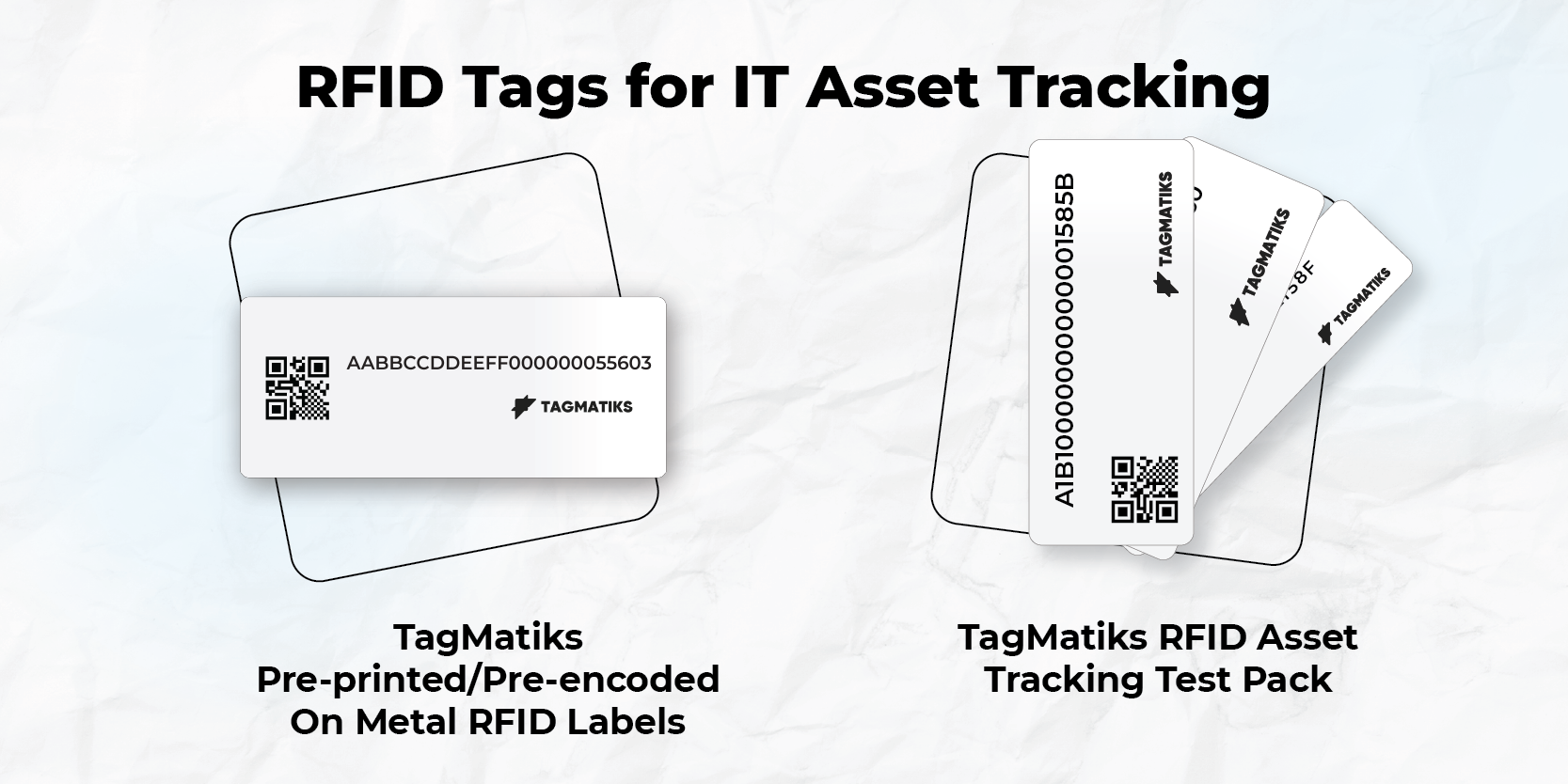
TagMatiks Pre-printed/Pre-encoded On Metal RFID Labels
-
- Designed specifically for metal surfaces.
- Available in multiple sizes (e.g., 45 × 8 mm, 70 × 18 mm).
- Pre-printed and pre-encoded for quick deployment.
- Applications: Laptops, servers, carts, metallic furniture, and industrial equipment.
- Features: Durable adhesive, optimized read range, and resistant to chemicals and harsh environments.
TagMatiks RFID Asset Tracking Test Pack
-
- Contains 25 sample on-metal labels in various sizes.
- Includes chips like Impinj M730 and NXP Ucode 8.
- Read ranges vary from ~6 ft to ~18 ft depending on tag size.
- Ideal for testing before full-scale deployment.
Readers: Devices That Capture Tag Data
Readers interpret signals from RFID tags and feed them into software systems. They can be handheld for mobility or fixed for continuous monitoring.
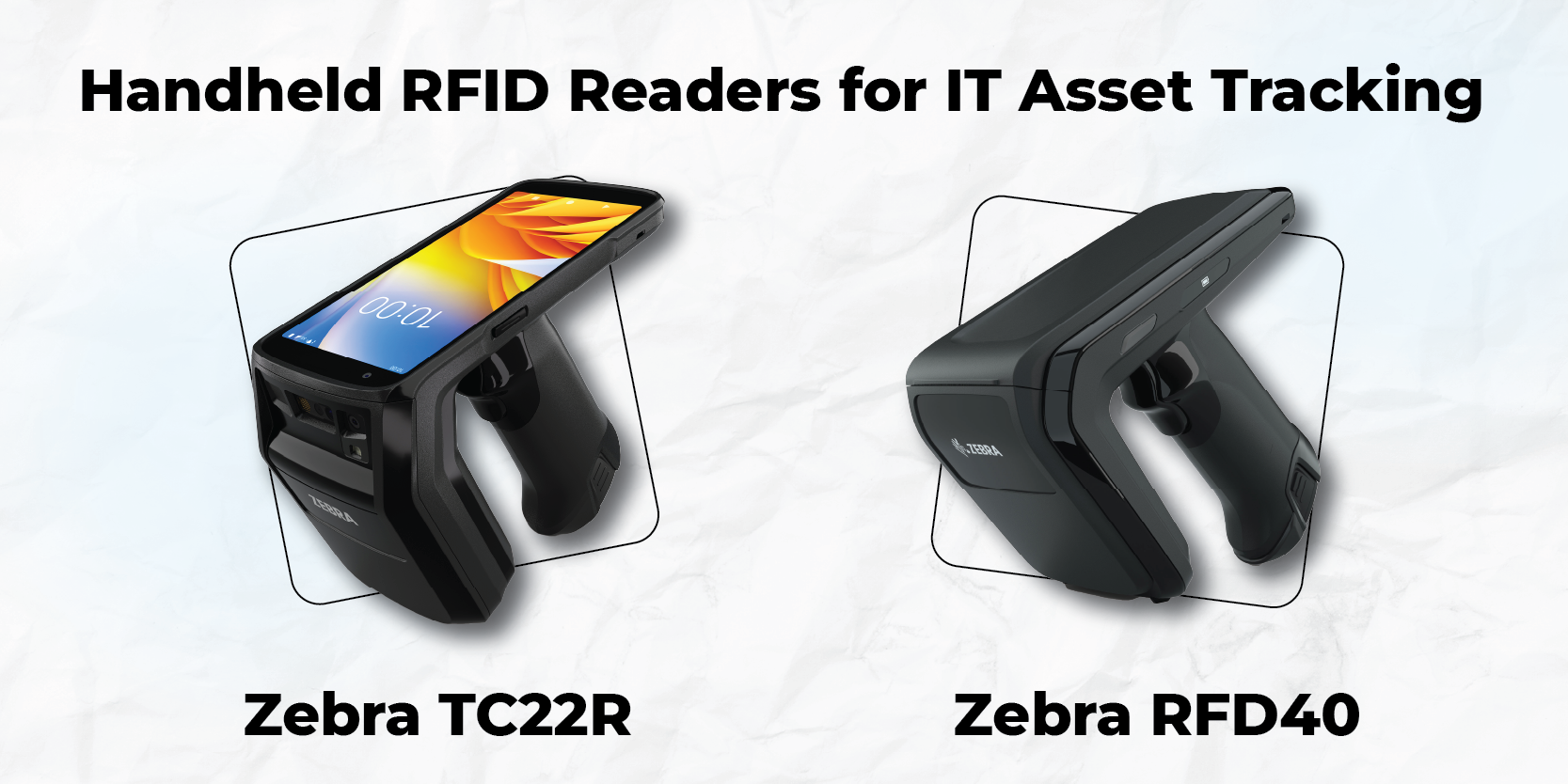
Handheld Readers
Zebra TC22R Integrated Handheld RFID Reader
-
- Android-based, lightweight design.
- Reads up to 1,300 tags per second with a range of up to 80 ft (24 m).
- Built-in Wi-Fi 6 and Bluetooth for easy connectivity.
- Ideal for inventory audits and mobile asset tracking.
-
- Attaches to Zebra mobile computers or smartphones.
- Industry-best 1,300+ tag reads per second.
- Read range up to 40 ft (12 m).
- Variants: Standard, Premium, Premium Plus (with barcode scanning).
- Future-proof with Wi-Fi 6 and Bluetooth 5.3.
Fixed Readers
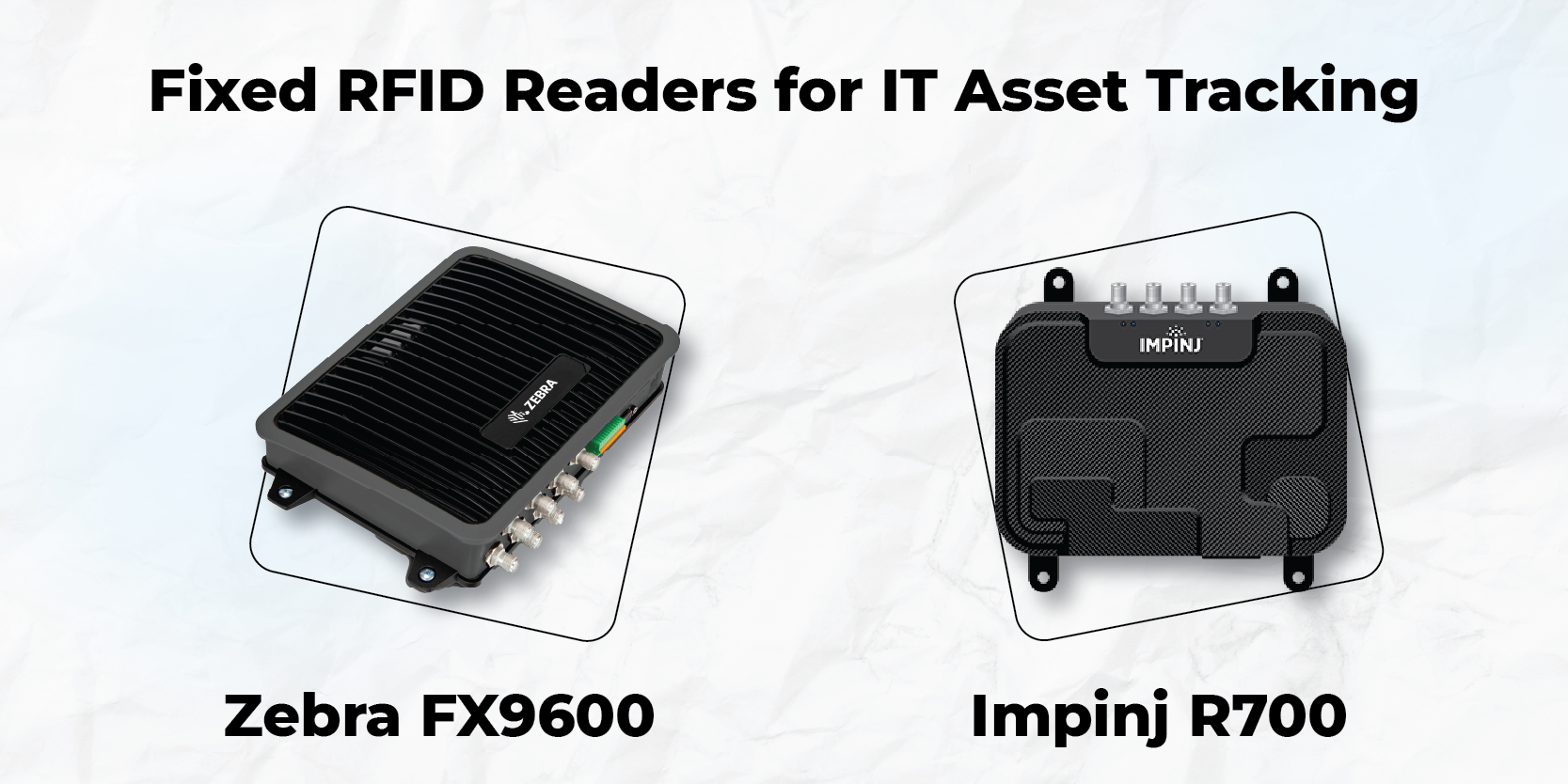
Zebra FX9600 Fixed RFID Reader
-
- Designed for high-volume, rugged environments.
- Superior RF sensitivity for long-range and accurate reads.
- Supports PoE/PoE+ for cost-efficient deployment.
- Commonly used in warehouses, data centers, and logistics hubs.
-
- Enterprise-grade performance with 1,300+ tag reads per second.
- Advanced edge computing: runs applications directly on the reader.
- Supports up to 32 antennas for wide coverage.
- Enhanced security and reliability for large-scale deployments.
Antennas: Facilitating Communication
Antennas connect to readers and extend coverage.
- Directional antennas focus signals for portals or entry points.
- Omnidirectional antennas provide broad coverage in open spaces.
- Antenna hubs (e.g., Impinj accessories) allow connecting multiple antennas to a single reader.
Software Platforms: Process and Analyze Collected Data
Software integrates tag and reader data into actionable insights.
-
- Cloud-based RFID asset tracking solution.
- Provides cradle-to-grave visibility of assets (from acquisition to disposal).
- Features:
- Dashboards, reports, and analytics.
- Automated audits and cycle counts.
- Integration with ERP/ITSM systems via APIs.
- Supports handhelds, fixed readers, and portals.
- Used across industries like healthcare, manufacturing, and IT.
Key Takeaway
For a robust RFID IT asset tracking system:
-
- Use TagMatiks On-Metal RFID Labels or the Test Pack for tagging.
- Deploy Zebra TC22R or RFD40 handheld readers for mobility.
- Install Zebra FX9600 or Impinj R700 fixed readers for continuous monitoring.
- Manage everything with TagMatiks AT software, ensuring real-time visibility, compliance, and scalability.
IT Asset Tracking Fundamentals
Defining IT Assets
IT assets include hardware such as servers, laptops, and networking equipment, as well as software licenses and peripheral devices. These resources are essential for business operations, and managing them effectively ensures efficiency, compliance, and security.
Challenges in Traditional Asset Tracking
Traditional methods like spreadsheets, manual logs, or barcode systems often fall short in modern IT environments. Here are four major challenges:
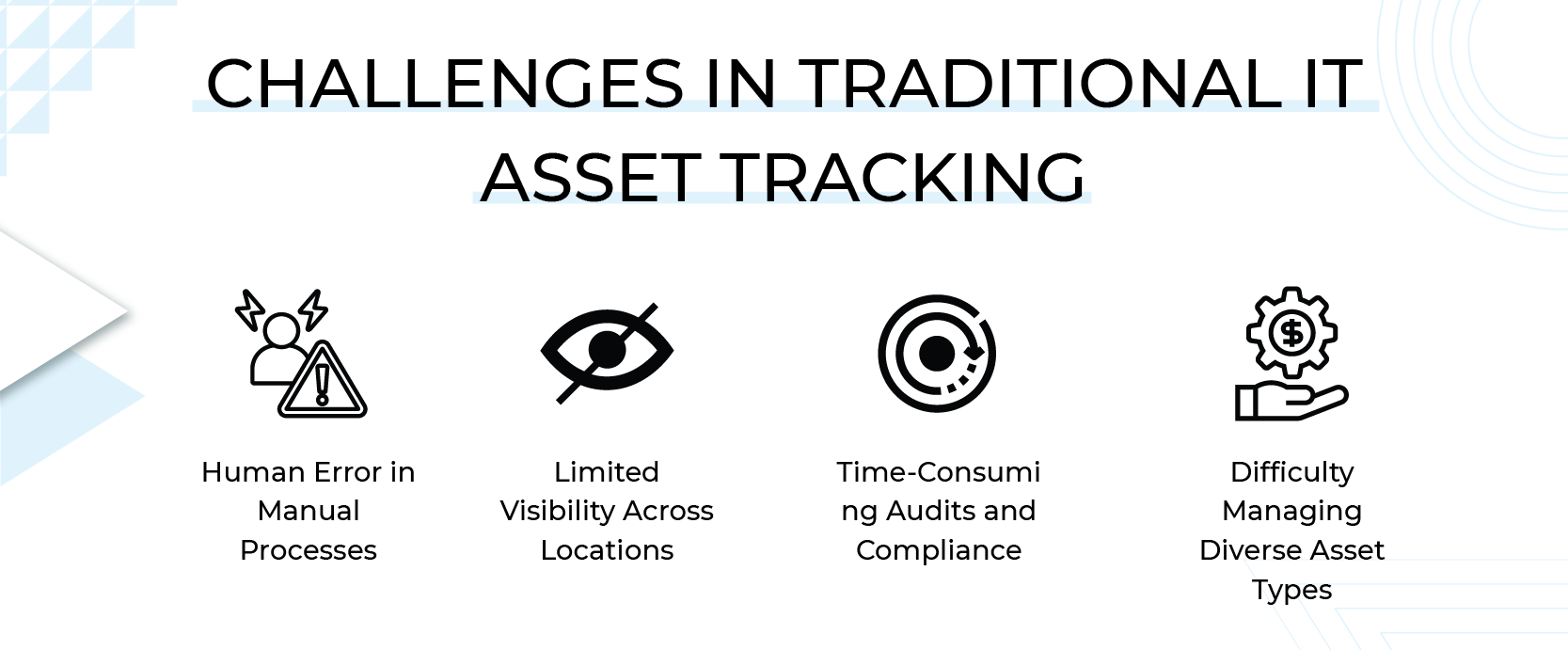
- Human Error in Manual Processes
- Manual entry in spreadsheets or databases is prone to mistakes such as typos, duplicate records, or missed updates.
- Over time, these errors accumulate, leading to inaccurate asset inventories and poor decision-making.
- Limited Visibility Across Locations
- Barcodes and manual logs require physical scanning, which only provides point-in-time data.
- Organizations with multiple offices or data centers struggle to maintain real-time visibility of assets.
- Time-Consuming Audits and Compliance
- Audits using barcodes or spreadsheets involve physically checking each item, which is labor-intensive.
- This slows down compliance reporting and increases the risk of failing regulatory requirements.
- Difficulty Managing Diverse Asset Types
- IT environments include a wide range of assets: hardware, software licenses, mobile devices, and accessories.
- Traditional systems often lack the flexibility to track different categories effectively, resulting in blind spots.
Why RFID is a Game-Changer
RFID addresses these challenges by automating asset tracking, reducing human error, and providing real-time visibility across multiple locations. Unlike barcodes, RFID can scan hundreds of assets simultaneously without line-of-sight, making audits faster and more accurate.
Benefits of RFID for IT Asset Management
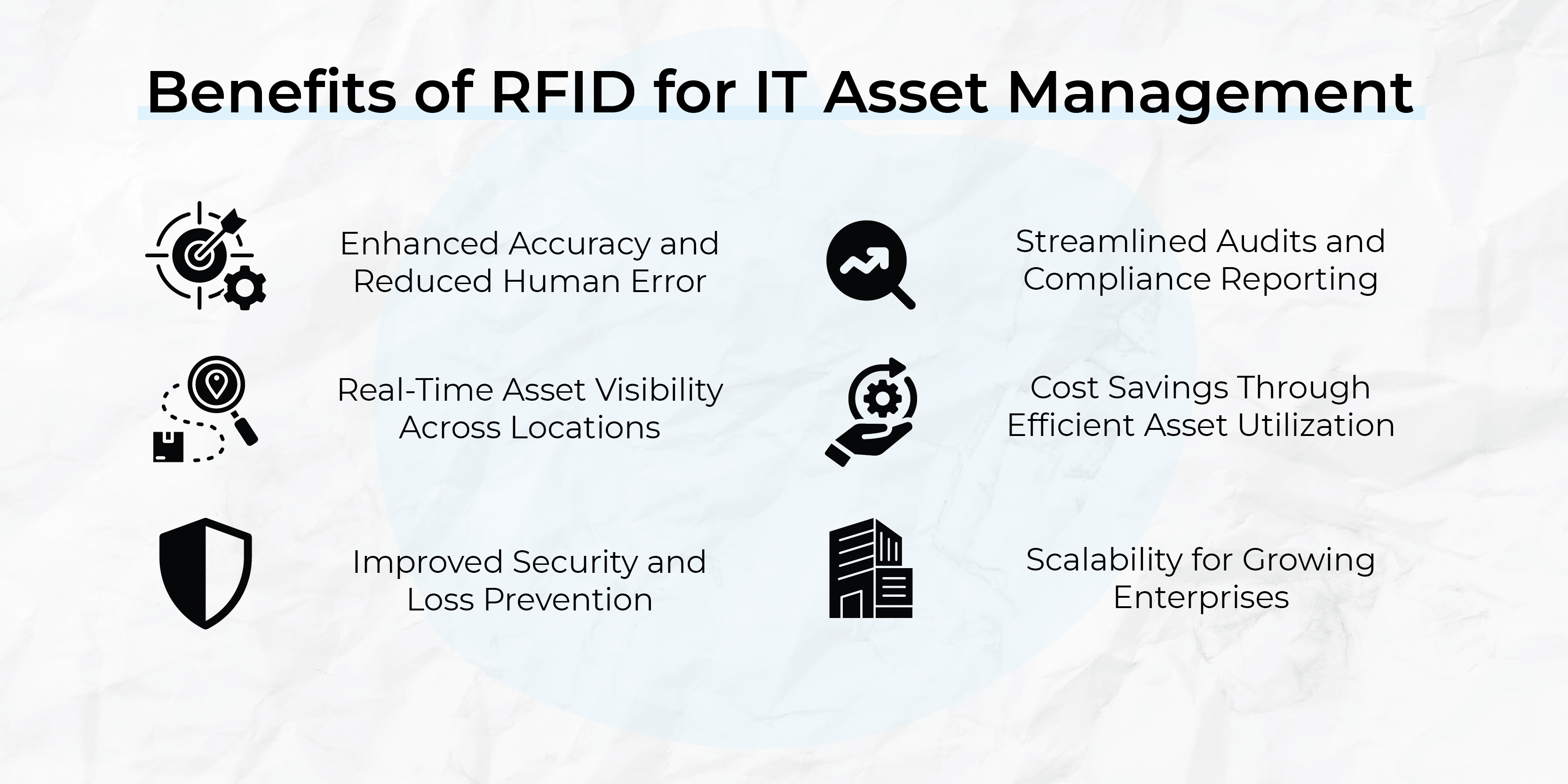
Enhanced Accuracy and Reduced Human Error
Traditional asset tracking methods rely heavily on manual input, which often leads to mistakes such as duplicate entries, missed updates, or incorrect asset identification. RFID automated scanning eliminates these issues by capturing data directly from tags without human intervention. This ensures that asset records remain accurate, reducing costly errors and improving trust in inventory data.
Real-Time Asset Visibility Across Locations
Organizations often operate across multiple offices, warehouses, or data centers. With RFID, assets can be tracked in real time, providing instant visibility into their location and status. This means IT teams can quickly identify where a laptop, server, or networking device is located, whether it’s in storage, deployed, or in transit. Real-time visibility supports faster decision-making and reduces downtime caused by misplaced equipment.
Improved Security and Loss Prevention
Sensitive IT assets such as servers, laptops, and mobile devices are vulnerable to theft or unauthorized movement. RFID systems can trigger alerts when assets leave designated areas or pass through RFID-enabled checkpoints. This helps organizations enforce security policies, prevent asset loss, and protect data stored on devices. In regulated industries like healthcare or finance, this level of control is critical for compliance.
Streamlined Audits and Compliance Reporting
Audits are often time-consuming when conducted manually. RFID simplifies this process by enabling bulk scanning of hundreds of assets in seconds. Auditors can generate accurate reports directly from RFID software platforms, ensuring compliance with industry regulations such as ISO standards or government mandates. Streamlined audits reduce labor costs and minimize disruption to daily operations.
Cost Savings Through Efficient Asset Utilization
When organizations lack visibility, they often purchase duplicate equipment or fail to use existing assets effectively. RFID provides clear insights into asset availability and usage, helping IT managers avoid unnecessary purchases. By optimizing asset utilization, companies achieve cost savings and extend the lifecycle of existing resources. Over time, this leads to significant reductions in capital expenditure.
Scalability for Growing Enterprises
As businesses expand, so does the complexity of managing IT assets. RFID systems are inherently scalable, capable of tracking thousands—or even millions—of assets across multiple sites. Whether an organization adds new offices, data centers, or remote employees, RFID can adapt without requiring a complete overhaul. This makes it a future-proof solution for enterprise growth.
Common IT Assets Tracked with RFID
Servers, Laptops, and Workstations
Servers, laptops, and desktop workstations are the backbone of IT infrastructure. These devices often contain sensitive data and represent significant investments. RFID tagging ensures that each device is uniquely identified and tracked throughout its lifecycle. IT teams can quickly locate equipment during audits, monitor usage, and prevent loss or theft. For example, RFID tags on laptops allow organizations to verify which devices are checked out to employees and ensure they are returned or accounted for.
Networking Equipment and Data Center Hardware
Routers, switches, firewalls, and other networking gear are critical for connectivity and uptime. In large data centers, managing thousands of devices manually is nearly impossible. RFID enables real-time monitoring of these assets, helping IT staff track location, maintenance schedules, and movement. This reduces downtime, ensures compliance with maintenance policies, and prevents misplacement of expensive equipment.
Mobile Devices and Peripheral Accessories
Smartphones, tablets, and accessories such as keyboards, mice, and docking stations are widely distributed across organizations. These smaller items are easy to lose or misplace. By attaching RFID tags, companies can maintain accountability for mobile assets, especially in remote or hybrid work environments. This ensures employees have the tools they need while reducing unnecessary replacement costs.
RFID in Cloud and Hybrid IT Environments
Modern IT environments often span on-premises infrastructure, cloud services, and hybrid setups. RFID integrates seamlessly with cloud-based asset management platforms, providing centralized visibility across diverse environments. This allows IT managers to track physical assets alongside virtual resources, ensuring a unified view of the entire IT ecosystem. Integration with cloud systems also enables remote monitoring and reporting from anywhere.
RFID for Remote Workforce Asset Management
With the rise of remote work, organizations issue laptops, mobile devices, and accessories to employees working outside the office. RFID helps maintain accountability for remote assets by tracking which devices are assigned to which employees. This ensures assets are returned when employees leave the company and provides visibility into the distribution of equipment across the workforce. It also supports compliance by ensuring sensitive devices are properly managed, even outside corporate premises.
Implementation Strategy
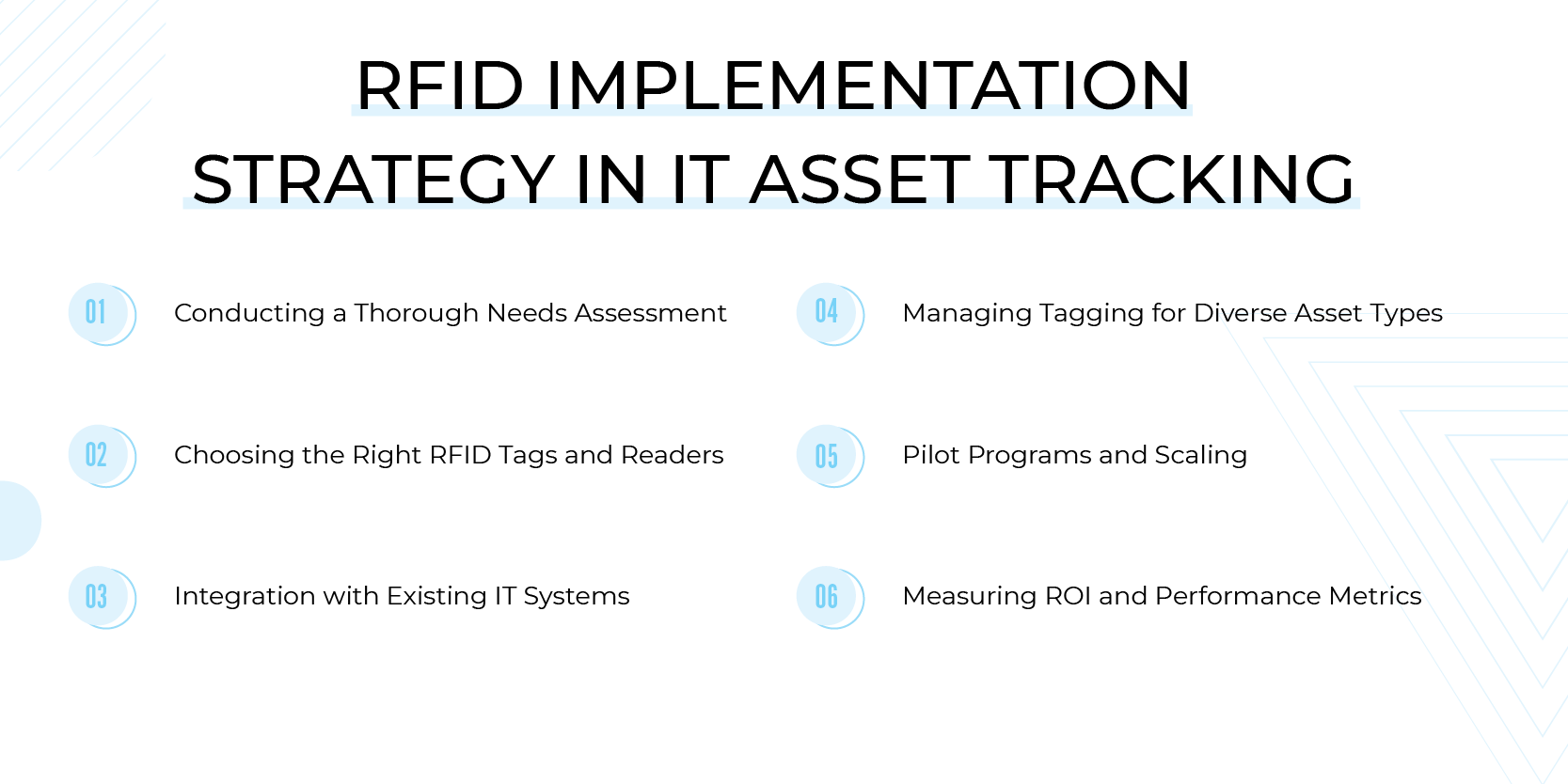
Conducting a Thorough Needs Assessment
Before investing in RFID, organizations should carefully evaluate their current asset management challenges. This involves identifying pain points such as inaccurate inventories, time-consuming audits, or frequent asset loss. A needs assessment helps define clear goals—whether it’s improving compliance, reducing costs, or enhancing visibility—so the RFID solution is tailored to business priorities.
Choosing the Right RFID Tags and Readers
Not all tags and readers are suitable for every environment. For example, on-metal RFID tags are required for servers and racks, while flexible labels may work for laptops or accessories. Similarly, handheld readers like the Zebra RFD40 are ideal for mobile audits, while fixed readers such as the Zebra FX9600 are better for continuous monitoring in data centers. Selecting the right mix ensures optimal performance across diverse asset types.
Integration with Existing IT Systems
RFID should not operate in isolation. It must integrate with existing systems such as ERP (Enterprise Resource Planning), ITSM (IT Service Management), or dedicated asset management platforms. This integration allows RFID data to flow seamlessly into existing workflows, ensuring that IT teams have a single source of truth for asset information.
Managing Tagging for Diverse Asset Types
Different IT assets require different tagging approaches. Servers and racks may need durable on-metal tags, while mobile devices might use smaller adhesive labels. Accessories like cables or peripherals may require bulk tagging strategies. A tagging plan ensures that every asset type is accounted for, reducing blind spots in tracking.
Training Staff for Smooth Adoption
Technology adoption depends on user confidence. Employees should be trained on how to use handheld readers, interpret RFID dashboards, and follow tagging procedures. Training ensures that RFID systems are used consistently and effectively, minimizing errors and resistance to change. Staff training is critical for long-term success.
Pilot Programs and Scaling
Organizations should start with a pilot programme, perhaps in one department or data center, to test RFID effectiveness. This allows IT teams to identify challenges, refine processes, and measure results before scaling across the enterprise. A pilot-to-scale approach reduces risk and ensures smoother adoption.
Measuring ROI and Performance Metrics
RFID investments must demonstrate value. Metrics such as reduced audit time, fewer lost assets, improved compliance, and cost savings from optimized asset utilization should be tracked. Measuring ROI helps justify the investment and guides future improvements.
Future Trends in RFID IT Asset Tracking
RFID is evolving rapidly, with integration into IoT and AI enabling predictive asset management through sensor data and analytics. Cloud-based platforms provide centralized visibility and scalability, while predictive analytics help organizations plan maintenance and replacements more effectively. Blockchain integration ensures tamper-proof records of asset movement, enhancing security. Additionally, RFID supports sustainability by optimizing asset usage, reducing waste, and promoting energy-efficient IT practices, making it a strategic tool for future-ready enterprises.
Conclusion
RFID has proven to be a transformative solution for IT asset management, offering accuracy, visibility, and security that traditional methods cannot match. By automating tracking, streamlining audits, and reducing losses, organizations gain both operational efficiency and cost savings. As businesses grow, RFID systems scale seamlessly, ensuring long-term value. With future trends like IoT, AI, and blockchain integration, RFID is set to become an even more strategic tool, enabling smarter, greener, and more secure IT asset management.
Recent Posts
-
Comprehensive Comparison of RFID Metal Mount Tags
RFID Metal Mount Tags are engineered to function reliably on metallic surfaces, where standard RFID …Sep 14th 2026 -

RFID Read Range Dropping? 5 Factors & Settings to Fix It
Introduction RFID technology is the backbone of modern retail and business operations. From tracking …Sep 7th 2026 -
Comprehensive Guide to Troubleshooting RFID Handheld Readers
RFID handheld readers are critical tools for inventory management, asset tracking, and logistics. Wh …Aug 19th 2026