
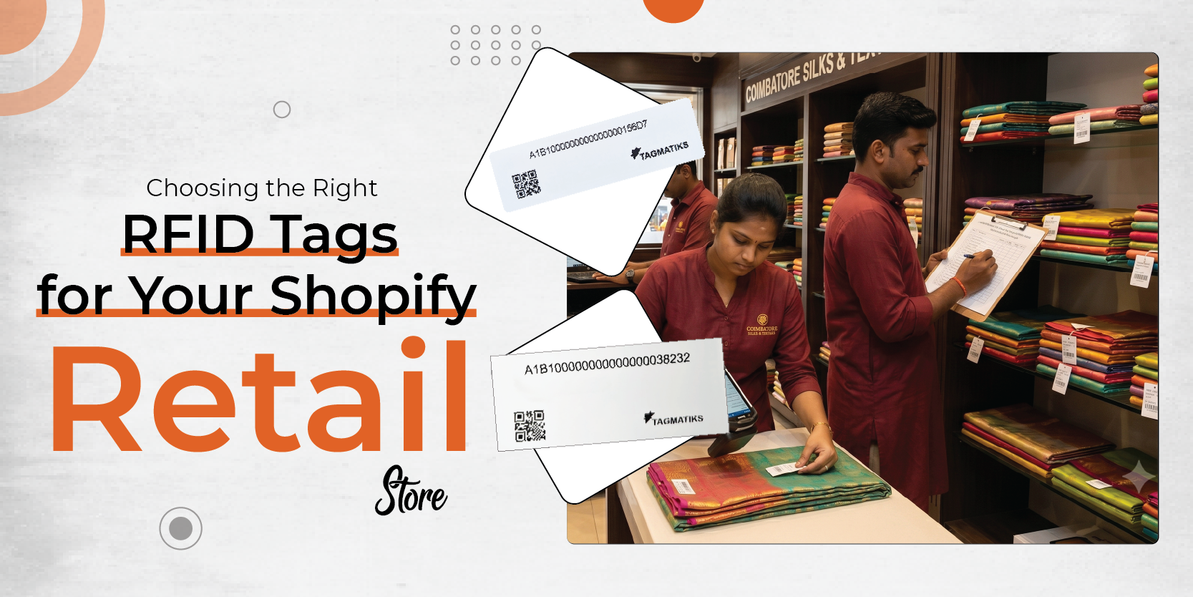
Choosing the Right RFID Labels for Your Shopify Retail Store
TagMatiks RFID labels
For Shopify retailers, managing inventory shouldn't feel like a guessing game. The most effective choice for retail environments is passive UHF (ultra-high frequency) RFID Labels. They are highly scalable, budget-friendly, and allow you to scan hundreds of items simultaneously—even through packaging.
Here is a curated guide to RFID Labels, stripped of industrial fluff and focused strictly on retail operations.
Retail Standard: Passive UHF Labels
- Power Source: No internal battery (powered entirely by the RFID reader signals).
- Range: Long range (10–15 meters), allowing quick scans of entire stockrooms.
- Cost: Very low per tag, making them highly scalable for thousands of SKUs.
- Why it matters for Shopify: UHF dominates retail because it enables rapid cycle counts and seamless integration with your Shopify POS.
Tailored RFID Tag Types for Retailers
1. RFID Hang Tags (Best for Apparel & Accessories)
- Composition: Paperboard or plastic with an embedded UHF RFID inlay.
- Attachment: Hung directly onto clothing, shoes, or accessories using strings or Swiftach fasteners.
- Shopify Integration: Doubles as your branding/price tag. Staff can scan entire clothing racks in seconds to keep your Shopify online store and boutique inventory perfectly synced.
- Best Retail Use Case: Fashion boutiques, footwear, and seasonal clothing collections.
2. RFID Paper Labels (Best for Fast-Moving Consumer Goods)
- Composition: Thin, disposable paper labels with an RFID inlay (often printable).
- Attachment: Stuck directly onto product packaging or shipping boxes.
- Shopify Integration: Ideal for high-volume, lower-margin items. Can be printed with a standard barcode on top and RFID inside for dual-system tracking.
- Best Retail Use Case: Grocery, cosmetics, FMCG (Fast-Moving Consumer Goods), and e-commerce shipping boxes.
3. RFID Poly Labels (Best for Hardware & Rugged Retail)
- Composition: High-impact polycarbonate or polymer casing.
- Attachment: Riveted, screwed, or tied to heavy items.
- Shopify Integration: Provides highly durable tracking in retail environments where items are roughly handled. These can often be detached at checkout and reused, lowering long-term tag costs.
- Best Retail Use Case: Hardware stores, sporting goods, and outdoor equipment retail.
4. RFID Laundry Labels (Specialty: Apparel Rentals)
- Composition: Encased in heat-and-chemical-resistant epoxy.
- Shopify Integration: If your retail model involves clothing or costume rentals, these Labels allow Shopify to track the entire item lifecycle: rented out, returned, sent to cleaners, and then restocked.
- Best Retail Use Case: Designer dress rentals, tuxedo shops, and costume rental stores.
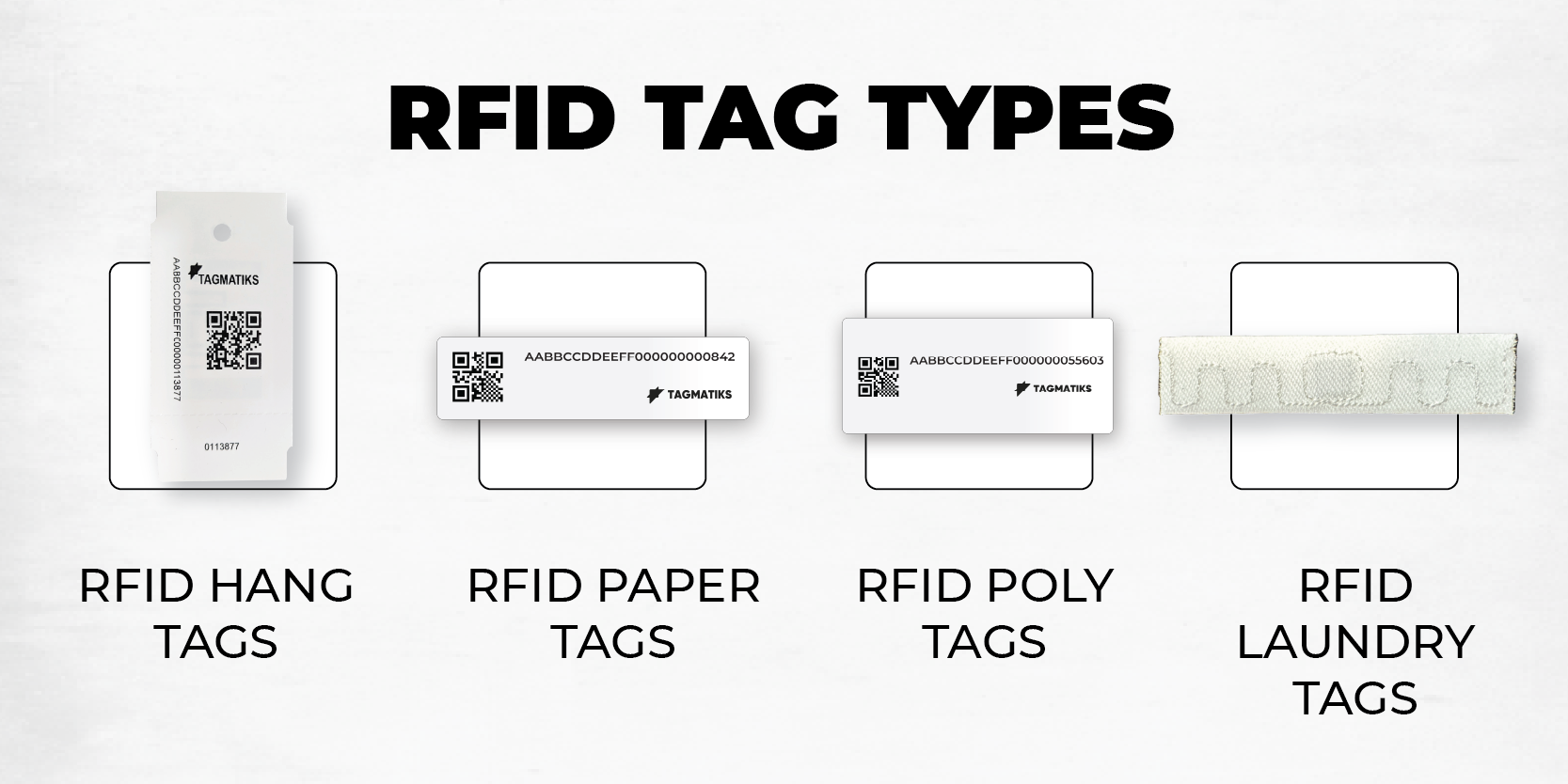
Retail Tag Comparison Table
| Tag Type | Durability | Cost | Best Retail Application | Shopify Workflow Benefit |
|---|---|---|---|---|
| Hang Tags | Medium | Low | Apparel, shoes, accessories | Fast cycle counts on the sales floor |
| Paper Labels | Low | Very Low | Grocery, cosmetics, packaged retail | Cheap, high-volume disposable tracking |
| Poly Labels | High | Medium–High | Hardware, tools, sporting goods | Durable, reusable tag option |
| Laundry Labels | Extremely High | Medium | Apparel & costume rentals | Tracks rental lifecycles and washing |
How RFID Transforms Your Shopify Workflow:
Real-Time Cycle Counts: Instead of closing the store for weekend inventory counts, staff can wave an RFID reader down an aisle and update thousands of Shopify SKUs in minutes.
- Frictionless Checkout: An RFID-enabled Shopify POS can read multiple items in a shopping basket at once without searching for individual barcodes, speeding up lines.
- Smart Returns: Returned items can be scanned instantly, verifying the product and restocking it into your digital inventory automatically.
- Flawless Omnichannel Sync: Drastically reduces "phantom inventory," ensuring that if an item sells out in your physical boutique, your Shopify online store reflects it immediately to prevent overselling.
RFID Labels are fully compatible with TagMatiks Retail Software, making them an essential component of modern retail inventory management. The software is designed to seamlessly integrate with a wide range of RFID labels, whether they are pre-printed, pre-encoded, or custom-printed on demand. This compatibility ensures that retailers can easily associate labels with products, track items across multiple locations, and maintain real-time visibility of their stock. By leveraging RFID Labels within TagMatiks Retail, businesses can automate processes such as cycle counts, reconciliation, and event tracking (sold, transfer, received, and dispose), reducing manual errors and improving operational efficiency.
The system also supports bulk RFID tag printing directly from a web browser, allowing retailers to generate large batches of labels quickly and consistently. Furthermore, RFID labels integrated with TagMatiks Retail enable smooth synchronization with POS systems and Shopify, ensuring that both physical and online inventory records remain accurate. This compatibility empowers retailers to streamline workflows, minimize shrinkage, and deliver a better customer experience by always having the right products available when needed.
Recent Posts
-
How to Choose the Right RFID Reader for Shopify Retailers
Understanding RFID in Retail RFID technology (Radio Frequency Identification) allows retailers to tr …Jul 1st 2026 -
Streamlining Appliance Warehousing and Distribution with RFID
Introduction Warehousing appliances are tough because they’re bulky, fragile, and demand often spike …Jun 26th 2026 -
Choosing the Right RFID Labels for Your Shopify Retail Store
TagMatiks RFID labels For Shopify retailers, managing inventory shouldn't feel like a guessing game. …Jun 17th 2026