
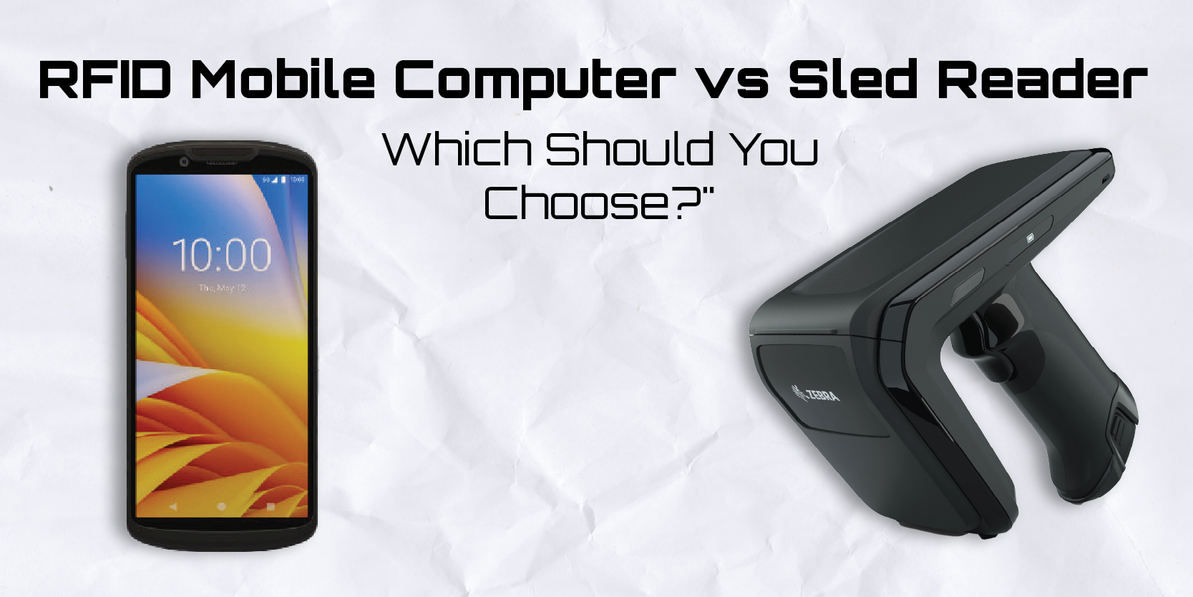
RFID Mobile Computer vs Sled Reader: Which Should You Choose?
RFID technology has become a game‑changer in retail, logistics, and asset tracking. It helps businesses improve inventory accuracy, reduce shrinkage, and streamline operations. But one common challenge is choosing the right device to read RFID tags.
Two popular options are RFID mobile computers and handheld sled readers. Both serve the same purpose capturing RFID data but they differ in design, cost, and usability. Understanding these differences is crucial for efficiency, scalability, and long‑term ROI.
What is an RFID mobile computer?
An RFID mobile computer is a rugged, all‑in‑one device that combines an RFID reader with a mobile computing platform. It’s designed for environments like warehouses, retail stores, and logistics hubs where durability and continuous scanning are essential.
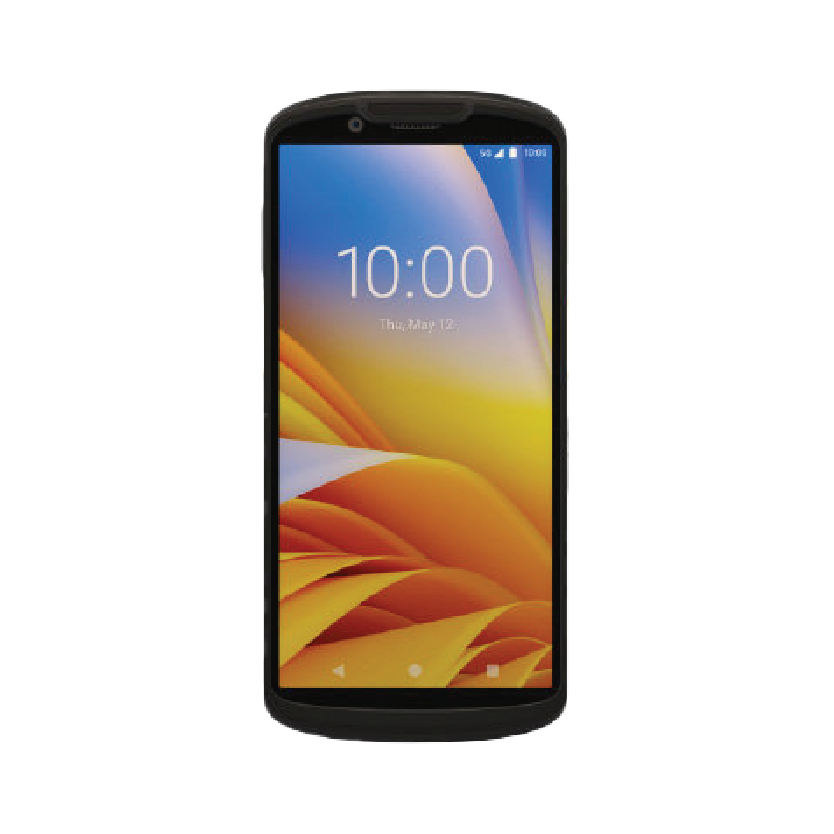
Typical Features:
- Built‑in RFID scanner and barcode reader
- Touchscreen interface
- Wi‑Fi/4G/5G connectivity for real‑time data transfer
- Rugged design for warehouse or retail environments
Advantages
The biggest advantage of an RFID mobile computer is seamless integration. Because the RFID reader and computer are built into one device, there’s no need to juggle multiple tools. This makes operations smoother and reduces the risk of compatibility issues. They also allow for real‑time data capture and processing, which is critical for businesses that rely on accurate inventory tracking or need instant updates to ERP or warehouse management systems. Finally, these devices are durable and reliable, built to handle heavy scanning tasks in environments where equipment is often exposed to dust, drops, or long hours of use.
Examples:
- Zebra TC58 Android Mobile Computer – A rugged device with advanced scanning and connectivity features.
- Zebra TC53 Android Mobile Computer – Designed for retail and logistics, offering strong performance and durability.
What is a Handheld Sled Reader?
A handheld sled reader is an RFID reader attachment that pairs with a smartphone or tablet. By connecting through Bluetooth or a physical dock, it essentially transforms your mobile device into a fully functional RFID scanner. This makes sled readers a flexible option for businesses that want RFID capability without investing in a dedicated mobile computer.
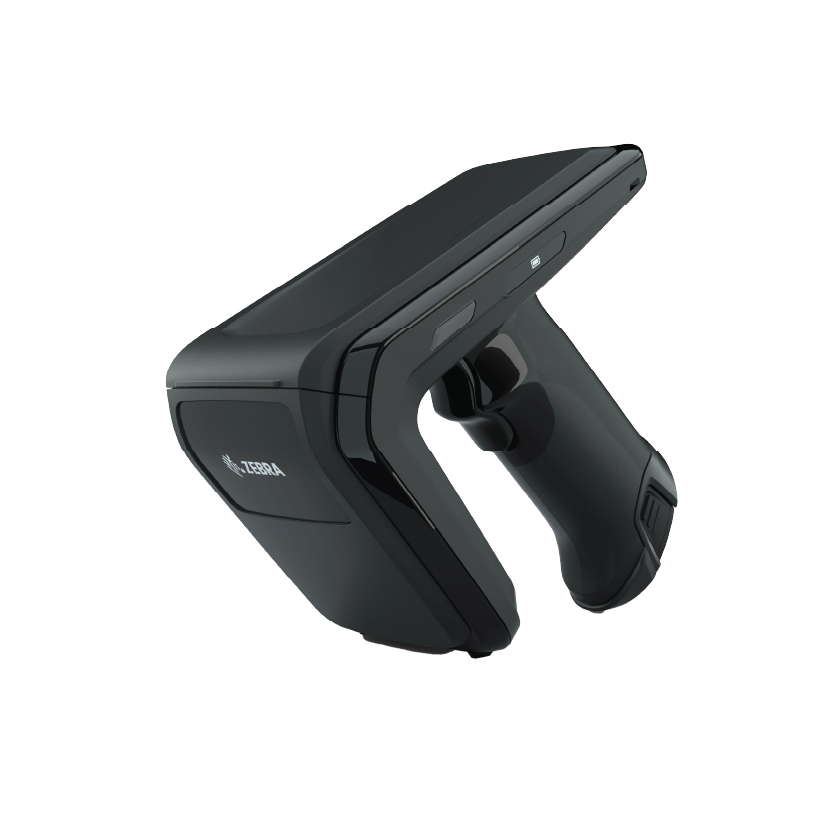
Typical Features:
- Modular design that clips onto or connects with a host device
- Bluetooth connectivity
- Lightweight and portable
Advantages:
One of the biggest advantages of sled readers is their lower cost compared to RFID mobile computers, making them attractive for small to medium businesses or those testing RFID for the first time. They are also flexible, since you can easily upgrade or replace the host device without changing the reader itself. Their portability and user‑friendly design make them convenient for staff who are already comfortable using smartphones or tablets.
Limitations:
However, sled readers do have some limitations. They are dependent on the smartphone or tablet they connect to, meaning performance can vary based on the host device. Their battery life is generally shorter compared to mobile computers, which can be a drawback in environments requiring continuous scanning. Finally, sled readers are less rugged, so they may not withstand the demanding conditions of warehouses or industrial sites as well as mobile computers.
Examples:
- Zebra RFD40 Standard – A versatile sled reader designed for retail and light industrial use.
- Zebra RFD40 Premium – Offers enhanced performance and advanced features for enterprise applications.
- TSL 1166 Rugged Bluetooth UHF Sled RFID Reader – Built for durability, with strong Bluetooth connectivity and UHF RFID support.
- CSL CS108 Bluetooth UHF RFID 2D Sled Reader – Combines RFID and barcode scanning, suitable for field operations and retail.
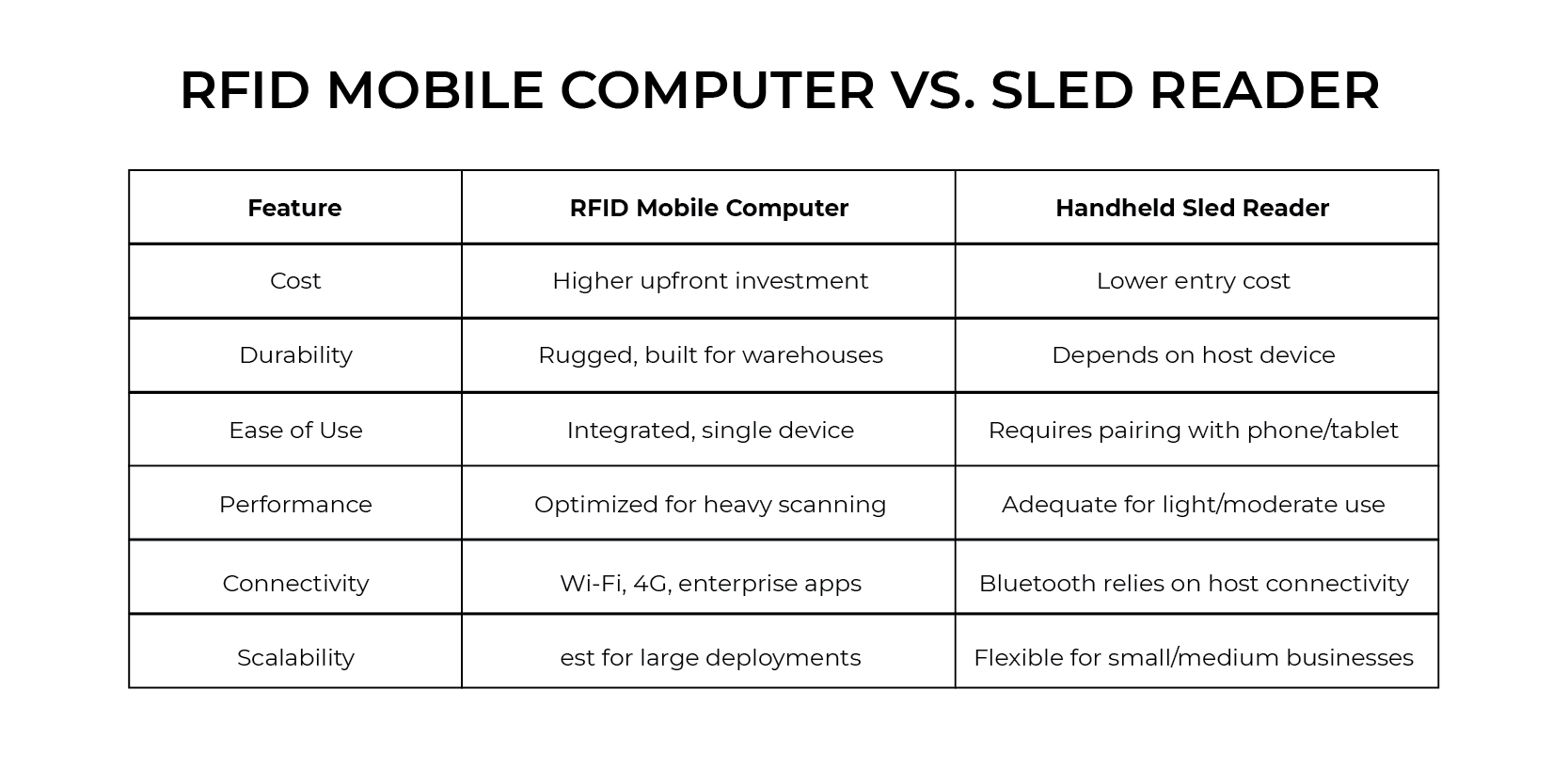
Feature‑by‑Feature Comparison
|
Feature |
RFID Mobile Computer |
Handheld Sled Reader |
|
Cost |
Higher upfront investment due to integrated hardware and enterprise features. |
Lower entry cost, ideal for small businesses or pilot RFID projects. |
|
Durability |
Rugged design, built to withstand drops, dust, and warehouse conditions. |
Durability depends on the host smartphone/tablet; sled itself may be less rugged. |
|
Ease of Use |
Integrated, single device with built‑in software support; easier for enterprise adoption. |
Requires pairing with a phone/tablet; an extra steps may cause connectivity issues. |
|
Performance |
Optimized for heavy scanning, faster read rates, and large tag volumes. |
Adequate for light to moderate scanning; may struggle with very large inventories. |
|
Connectivity |
Supports Wi‑Fi, 4G, and enterprise apps for real‑time integration with ERP/WMS systems. |
Relies on Bluetooth and the host device’s connectivity; performance varies with the smartphone. |
|
Scalability |
Best suited for large deployments and continuous scanning operations. |
Flexible for small/medium businesses; allows gradual scaling without heavy investment. |
|
Battery Life |
Larger batteries designed for long shifts; reliable for continuous use. |
Shorter battery life; host device also drains quickly, requiring frequent recharging. |
|
Software Integration |
Often comes with enterprise‑ready apps or supports advanced inventory software. |
Depends on apps available on the host device; may require third‑party software. |
|
Flexibility |
Fixed solution—the entire device must be replaced when outdated. |
Greater flexibility—the host device can be upgraded or replaced without changing the sled. |
|
Portability |
Bulkier and heavier, less convenient for mobile staff. |
Lightweight and portable, easy to carry during fieldwork or retail floor operations. |
|
Training Needs |
May require staff training, especially for those unfamiliar with enterprise devices. |
Easier adoption for staff already comfortable with smartphones/tablets. |
Key Decision Factors
When deciding between an RFID mobile computer and a handheld sled reader, it’s important to weigh the following considerations:
Budget constraints
Mobile computers require a higher upfront investment but often deliver stronger long‑term ROI through durability and performance. Sled readers are more affordable initially, making them suitable for businesses with tighter budgets.
Scale of operations
Large warehouses, logistics hubs, and retail chains benefit from mobile computers due to their ability to handle heavy scanning. Smaller stores or pilot projects may find sled readers more practical.
Integration needs
If your business relies on ERP, POS, or inventory systems that require real‑time updates, mobile computers are better suited. Sled readers can integrate too, but they depend on the host device’s apps and connectivity.
Workforce training
Mobile computers may require training for staff unfamiliar with enterprise devices. Sled readers are easier to adopt for employees already comfortable with smartphones or tablets.
Future scalability
Mobile computers are designed for large deployments and long‑term use. Sled readers offer flexibility for gradual scaling, especially for businesses that want to test RFID before committing fully.
Environment
Consider where the devices will be used. Rugged mobile computers are ideal for warehouses and industrial sites, while sled readers are better for retail floors or field operations.
Portability
If staff need lightweight devices for mobility, sled readers are easier to carry. Mobile computers, while powerful, are bulkier.
Common Buyer Mistakes to Avoid
When choosing between these devices, businesses often make avoidable mistakes. Here are the most common ones:
- Choosing solely based on price: Opting for the cheapest option without considering long‑term ROI can lead to higher costs later, especially if devices fail in demanding environments.
- Ignoring compatibility with existing systems: Not checking whether the device integrates smoothly with ERP, POS, or inventory software can cause workflow disruptions.
- Underestimating durability needs: Using sled readers in rugged warehouse environments may result in frequent damage or downtime. Mobile computers are better suited for heavy use.
- Overlooking battery life and connectivity requirements: Devices with short battery life or poor connectivity can interrupt operations. Always assess how long the device can run during a typical shift.
- Failing to plan for scalability: Choosing a device that meets current needs but cannot grow with the business may force costly upgrades later.
- Neglecting staff training: Even the best device can fail to deliver results if employees don’t know how to use it effectively.
Conclusion
Both devices serve important roles, but they fit different business needs:
- RFID mobile computers are enterprise-grade, rugged, and all-in-one solutions designed for heavy scanning and large operations.
- Handheld sled readers are cost‑effective, flexible, and entry‑level options ideal for smaller businesses or pilot projects.
The right choice depends on your business size, budget, and operational environment. By carefully evaluating these factors, you’ll ensure your RFID investment delivers maximum efficiency and long‑term value.
Recent Posts
-
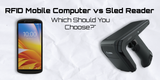
RFID Mobile Computer vs Sled Reader: Which Should You Choose?
RFID technology has become a game‑changer in retail, logistics, and asset tracking. It helps busines …Apr 7th 2026 -
How RFID Handheld Readers Can Be Used with GPS for Asset Location Tracking
Asset tracking has become a critical challenge across industries such as logistics, warehousing, hea …Feb 26th 2026 -
How to Choose the Best RFID Printer: A Complete Buyer's Guide
1. What is an RFID Printer (and Why Do You Need One)? An RFID (Radio Frequency Identification) print …Feb 17th 2026