
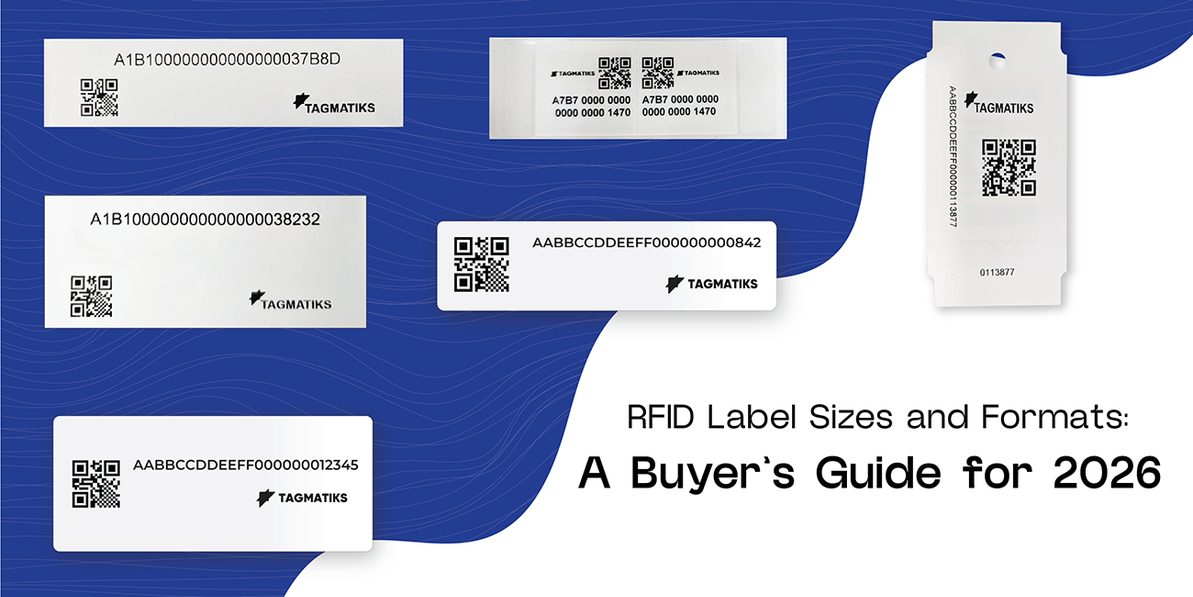
RFID Label Sizes & Formats Guide 2026
Radio Frequency Identification (RFID) labels are the backbone of modern asset tracking, inventory management, and supply chain visibility. Unlike traditional barcodes, RFID labels contain a chip and antenna that enable wireless data transmission. Radio Frequency Identification (RFID) labels are no longer just a technical upgrade—they are a strategic enabler of efficiency, compliance, and customer satisfaction. The right label size and format can reduce shrinkage, accelerate inventory counts, ensure regulatory compliance, and unlock real-time visibility across the supply chain. In 2026, businesses that optimize RFID label selection will gain measurable outcomes: faster operations, fewer errors, and stronger stakeholder trust. Choosing the wrong size, however, risks poor read rates, wasted investment, and compliance penalties.
Why RFID Label Size Matters
Read Performance: Larger antennas generally provide better read ranges, while smaller labels are ideal for compact items.
Compatibility: Labels must fit seamlessly onto packaging, equipment, or garments without interfering with usability.
Compliance: Retail giants like Walmart and government agencies such as the U.S. Department of Defense mandate specific label sizes for standardized tracking.
Printing & Encoding: The label must be compatible with RFID printers and encoders, ensuring smooth deployment.
Common RFID Label Sizes
|
Label Size |
Prouct Link |
Use Case |
Advantage |
|
2.63 X 1.02 inch |
Jewelry, small electronics |
Compact, discreet |
|
|
4.25 × 2.125 inch |
Retail apparel, accessories |
Balance of size and performance |
|
|
1.8 x 0.7 inch |
IT assets AND OTHER ASSETS |
On metal RFID tag best work on metal |
|
|
4.33 x 0.98 inch |
Industrial assets |
Maximum antenna size, robust |
|
|
4x 6 inch |
Cartons, logistics |
Good read range, versatile |
Industry-Specific Formats
Industry-Specific Formats and Why Sizes Differ
- Retail: Small to medium labels for apparel, footwear, and accessories.
Reason: Labels must remain discreet for customer-facing products while still readable in bulk inventory scans.
- Healthcare: Compact labels for vials, syringes, and medical equipment.
Reason: Medical packaging is small and often curved, requiring labels that fit without compromising sterility or dosage visibility.
- Logistics & Warehousing: Larger labels for cartons and pallets.
Reason: Bigger antennas ensure long-range readability during bulk scanning in distribution centers.
- Manufacturing: Rugged on-metal labels for tools, machinery, and harsh environments.
Reason: Metal interferes with RFID signals, so specialized formats with shielding layers are required.
- Automotive: Medium-to-large synthetic labels for tires, parts, and assemblies.
Reason: Labels must withstand heat, oil, and vibration while providing reliable read ranges in production lines.
- Pharmaceuticals: Ultra-small labels for blister packs and pill bottles.
Reason: Compliance with serialization laws and patient safety requires labels that fit tiny packaging without obscuring critical information.
Label Formats
RFID labels are available in multiple formats to suit different deployment needs:
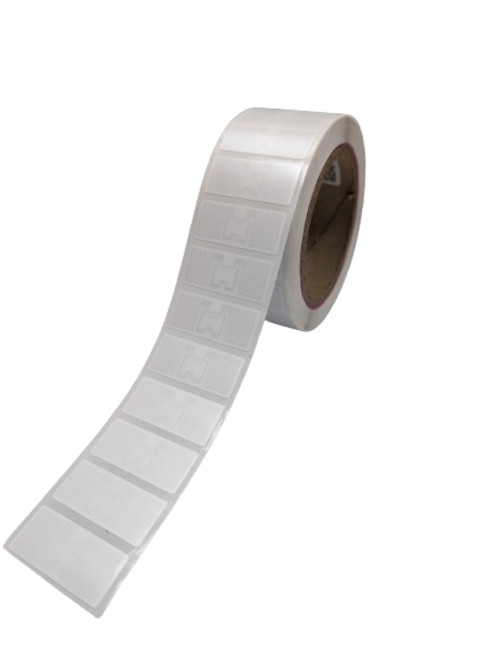
- Paper Labels: Cost-effective, ideal for retail and short-term use.
- Synthetic Labels: Durable, resistant to moisture and chemicals.
- On-Metal Labels: Designed with shielding layers to work on metallic surfaces.
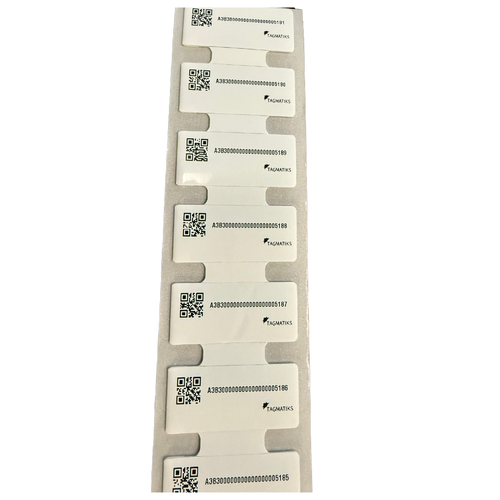
- Printable Labels: Compatible with RFID printers for dynamic encoding and branding.
Key Selection Factors
When buying RFID labels, consider:
- Application Environment (temperature, humidity, exposure to chemicals).
- Read Range Requirements (short vs. long distance scanning).
- Compliance Standards (GS1, Walmart mandates, other retailers).
- Printer Compatibility (ensure your RFID printer supports the chosen format).
- Cost vs. Durability Trade-off (paper vs. synthetic).
Risks & Challenges
- Wrong Size Selection: Can lead to poor read rates and wasted investment.
- Non-Compliance: Failure to meet retailer or government standards may result in penalties.
- Environmental Mismatch: Using paper labels in harsh conditions reduces lifespan.
- Overlooking Encoding Needs: Labels must support required data structures for interoperability.
Best Practices for Buyers
- Pilot Test Labels on actual products before bulk purchasing.
- Consult Standards like GS1 EPCglobal for compliance.
- Work with Trusted Vendors who provide testing.
- Balance Size & Performance—don’t oversize labels unnecessarily.
- Plan for Scalability—choose formats that can adapt to future needs.
Recent Posts
-

How RFID Handheld Readers Can Be Used with GPS for Asset Location Tracking
Asset tracking has become a critical challenge across industries such as logistics, warehousing, hea …Feb 26th 2026 -
How to Choose the Best RFID Printer: A Complete Buyer's Guide
1. What is an RFID Printer (and Why Do You Need One)? An RFID (Radio Frequency Identification) print …Feb 17th 2026 -
Zebra RFD40-M Premium Plus UHF RFID Sled
The Zebra RFD40M Premium Plus UHF RFID Sled is a modular, high-performance RFID reader that attaches …Feb 9th 2026